
Moringa Powder Benefits: How Just 2 Teaspoons Can Improve Energy, Digestion, and Immunity
Introduction
Many people today suffer from constant fatigue, weak digestion, low immunity, and nutritional deficiencies, despite taking multiple supplements. Confusion is common—should one rely on milk for calcium, spinach for iron, or pills for energy? Ayurveda offers a simpler, food-based approach using time-tested medicinal plants. One such plant is Moringa (Shigru)—often called a “superfood,” yet frequently misunderstood and misused. While social media promotes it as a miracle ingredient, improper dosage and long-term excess can cause harm.
This article provides clear, evidence-aware guidance on moringa powder—its Ayurvedic properties, scientifically supported benefits, correct method of use, precautions, and common patient questions. The goal is not hype, but safe, informed, and effective use for long-term health.
What Is Moringa Powder?
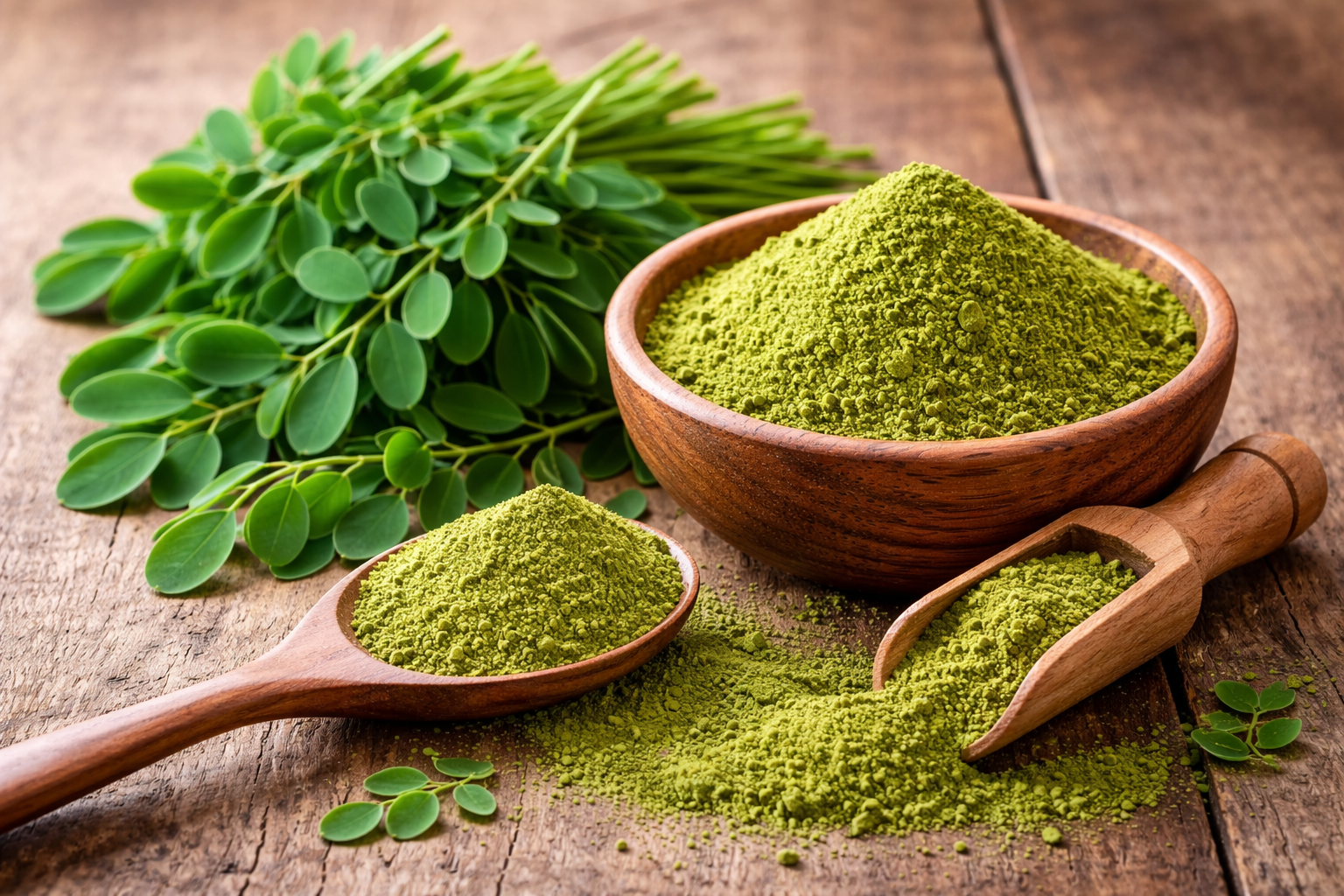
Moringa powder is prepared by drying and grinding the leaves of the Moringa oleifera plant, known in Ayurveda as Shigru Patra. Traditionally, it has been used for balancing metabolism, improving digestion, and supporting vitality.
Ayurvedic Properties of Moringa
-
Rasa (Taste): Katu (pungent), Tikta (bitter)
-
Guna (Quality): Laghu (light), Ruksha (dry)
-
Virya (Potency): Ushna (hot)
-
Vipaka (Post-digestive effect): Katu
-
Dosha Impact:
-
Reduces Kapha
-
Regulates Vata (when used correctly)
-
May aggravate Pitta if overused
-
From a nutritional viewpoint, moringa leaves are rich in calcium, iron, potassium, fiber, antioxidants, and chlorophyll, making them both a food and a medicinal supplement.
Key Health Benefits of Moringa Powder
1. Helps Reduce Fatigue and Physical Weakness
Chronic tiredness is often linked to poor nutrient absorption, iron deficiency, and low metabolic efficiency. Moringa powder provides a natural combination of iron, magnesium, and plant-based antioxidants that support cellular energy production.
Regular, moderate use may help:
-
Improve stamina
-
Reduce unexplained weakness
-
Support recovery from nutritional fatigue
Unlike stimulants, moringa works gradually by supporting metabolism, not forcing energy. This makes it suitable for people who feel tired even after adequate sleep.
2. Moringa Improves Digestion and Gut Health
Healthy digestion is central to Ayurveda. Weak digestion leads to Ama (toxic buildup), which affects immunity, skin, and energy.
Moringa contains:
-
Dietary fiber, which supports bowel regularity
-
Chlorophyll, which nourishes intestinal lining
-
Mild digestive stimulants that support enzyme activity
Benefits include:
-
Better appetite regulation
-
Improved nutrient absorption
-
Reduced bloating and heaviness
When digestion improves, many secondary complaints—such as dull skin and low immunity—also begin to resolve.
3. Moringa Supports Natural Immunity
Immunity is not just about fighting infections; it is about balanced inflammatory response and antioxidant protection.
Moringa leaves are rich in:
-
Vitamin C
-
Polyphenols
-
Flavonoids
These compounds help the body:
-
Neutralize free radicals
-
Support immune cell function
-
Reduce oxidative stress
This makes moringa useful during seasonal changes, frequent infections, or recovery phases—when used responsibly.
4. Moringa Provides Natural Calcium and Iron Support
Many people rely on dairy or synthetic supplements for calcium and iron, often facing digestive intolerance or poor absorption.
Moringa powder offers:
-
Calcium content comparable to milk
-
Iron content similar to leafy greens like spinach
-
Better tolerance in small doses
This makes it helpful for:
-
People with low dairy intake
-
Those with mild iron deficiency
-
Elderly individuals needing nutrient-dense foods
How to Use Moringa Powder
Ingredients
-
Moringa leaf powder (pure, food-grade)
Dosage
-
½ teaspoon once daily
-
Do not exceed 1 teaspoon per day unless advised by a doctor
How to Take
-
Mix into warm cooked food (dal, sabzi, soup)
-
Can also be mixed with lukewarm water after meals
Best Time
-
Daytime, preferably with lunch
-
Avoid taking at night
Duration
-
Use for 6–8 weeks
-
Take a break before long-term continuation
Who Should Avoid Moringa or Use with Caution
It is not suitable for everyone.
Avoid or consult a doctor if you:
-
Are pregnant or planning pregnancy
-
Have high Pitta symptoms (acidity, heat intolerance)
-
Have chronic eye disorders
-
Are undergoing fertility treatment
-
Take blood pressure or thyroid medications
⚠️ Important Medical Note:
Long-term excessive use of moringa leaves has been observed to potentially affect eye health and male sperm count. Moderation is essential.
Frequently Asked Questions (FAQs)
1. Can I take it daily?
Yes, but only in small quantities and for limited durations.
2. Is it safe for weight loss?
It may support metabolism, but it is not a weight-loss drug.
3. Can diabetics use it?
Mild use may help, but medication users should consult a doctor.
4. Does it increase heat in the body?
Yes, if overused. It has Ushna Virya.
5. Can children take it?
Only under medical supervision and in very small amounts.
Doctor’s Advice
As an Ayurvedic physician, I strongly emphasize that herbs are powerful, not harmless. Moringa should be treated as a medicinal food, not a daily superfood taken blindly.
Health improves through:
-
Correct dosage
-
Suitable duration
-
Balanced diet and lifestyle
No single herb can replace sleep, proper meals, stress management, or medical care when required.
— Dr. Arun Jharwal
Conclusion
Moringa powder can be a valuable addition to a balanced lifestyle when used wisely and moderately. Its benefits for energy, digestion, immunity, and nutrition are well supported by traditional use and modern research. However, long-term health comes from awareness, not excess.
If you are considering moringa for specific health concerns, consult a qualified Ayurvedic doctor for personalized guidance.
You can also read about Sarpagandha (Rauvolfia serpentina): Is It Good for Hypertension?
You can follow us on twitter, facebook, instagram & Youtube