
Garlic’s main active compound, allicin, is not stored inside the clove. It forms only when you crush or chop garlic, because that brings a compound called alliin into contact with an enzyme called alliinase. Heat and stomach acid quickly stop that enzyme. So the garlic 10-minute rule is simple: crush or chop 1–2 cloves, let them sit for about 10 minutes, then eat them with food or add them at the very end of cooking. Garlic, especially garlic extract, can lower high blood pressure slightly, but it does not replace BP medicine. If you take blood thinners or have surgery coming up, talk to your doctor before eating garlic daily.
Medically reviewed by: Dr. Arun Jharwal, BAMS, MD (Ayurveda)
At a Glance
| Question | Short answer |
|---|---|
| Where does garlic’s benefit come from? | Allicin, formed when garlic is crushed or chopped |
| Why wait 10 minutes? | Gives the enzyme time to make allicin before heat stops it |
| Biggest mistake | Throwing freshly chopped garlic straight into hot oil |
| Swallowing whole cloves? | Little allicin forms, because the clove is never crushed |
| How much per day? | 1–2 fresh cloves with food is a common kitchen amount |
| Best time to eat | With a meal, not on an empty stomach if it causes burning |
| Effect on BP | A small drop in high BP, seen mostly with garlic extracts |
| Who should be careful | People on blood thinners, before surgery, or with acidity or ulcers |
Why Garlic’s Benefit Is Not Ready Inside the Clove
A whole garlic clove holds a sulfur compound called alliin and, in separate cells, an enzyme called alliinase. While the clove is intact, the two never meet. When you crush, chop or chew garlic, the cell walls break, alliinase reaches alliin, and within seconds to minutes it turns alliin into allicin. Allicin gives fresh garlic its sharp smell and is behind most of the benefits studied for heart health.
So allicin is not something garlic “has”. It is something garlic makes when you damage it. How you cut, store and cook garlic decides how much of it you actually get.
The Garlic 10-Minute Rule: Crush, Wait, Then Use
The garlic 10-minute rule takes four steps:
- Peel 1–2 cloves.
- Crush them with the flat of a knife, a mortar and pestle (khalbatta), or chop them finely.
- Leave the crushed garlic open on the board for about 10 minutes.
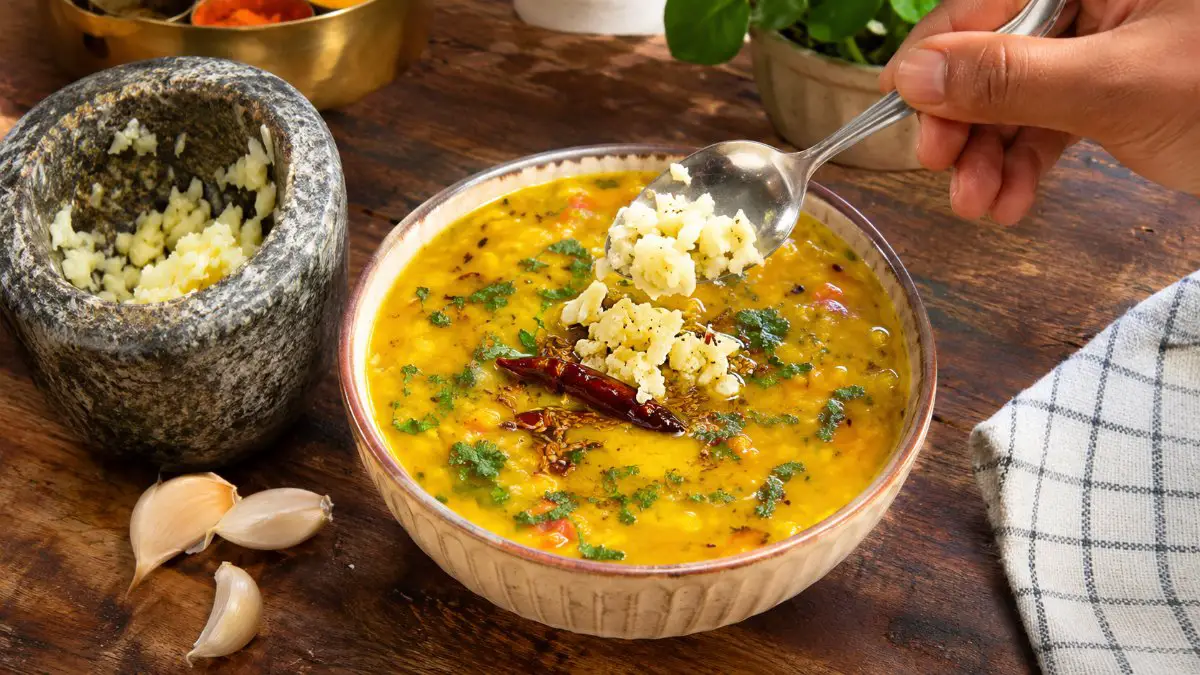
- Eat it with your food, or stir it into a dal, sabzi or chutney right at the end of cooking.
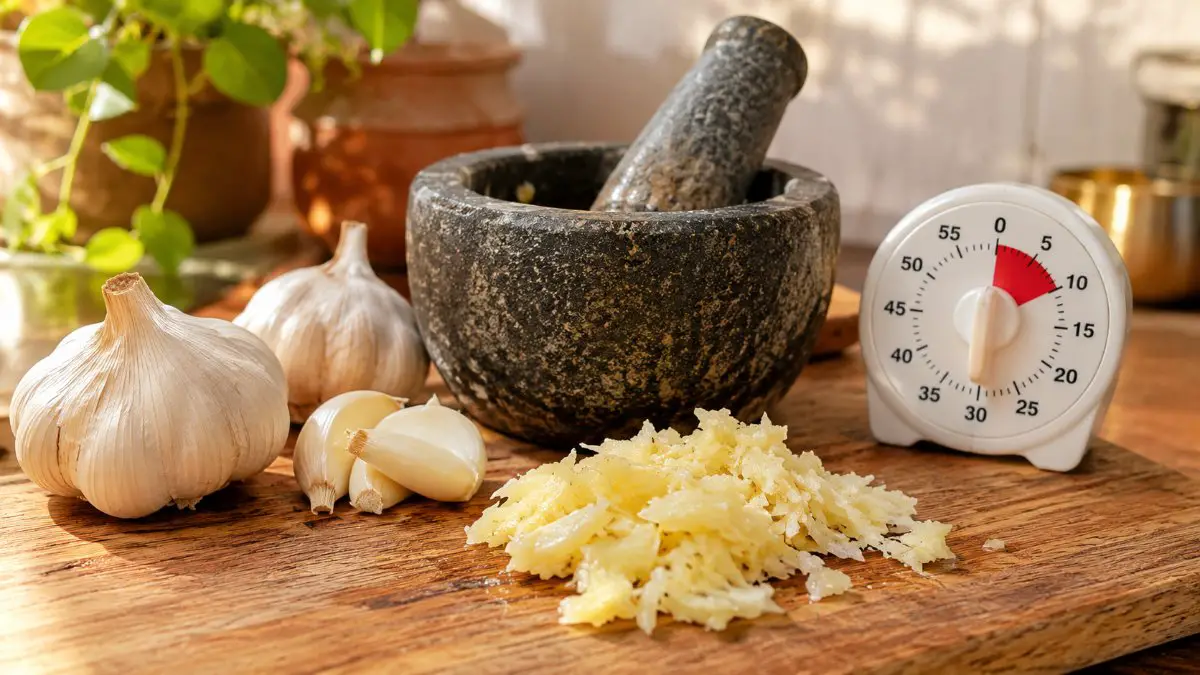
The waiting time matters most when garlic is going to be heated. Alliinase is sensitive to heat. If crushed garlic goes into hot oil straight away, the enzyme is destroyed before it has made much allicin. Letting it rest first allows allicin and related compounds to form, and some of them hold up better in cooking. In a lab study, garlic heated right after crushing lost its measured anticancer activity, while crushed garlic left to stand for 10 minutes before heating kept part of it.
If you are eating garlic raw, the enzyme starts working as soon as you crush or chew it, so the wait is less critical. Resting it for a few minutes still does no harm.
Mistake 1: Skipping the Garlic 10-Minute Rule Before Hot Oil
In many Indian kitchens, garlic goes into the tadka first. That is fine for flavour, but it is the least effective way to get allicin. High heat inactivates alliinase within about a minute, and allicin itself breaks down with long frying.
A better habit: crush the garlic before you start cooking, let it rest while you prepare the other ingredients, and add part of it in the last 1–2 minutes of cooking or on top of the finished dish.
Mistake 2: Swallowing Whole Cloves
Some people swallow a whole clove like a tablet to avoid the smell. A whole clove is never crushed, so very little allicin is made. Stomach acid also slows the enzyme. If you want the benefit, the clove has to be crushed, chopped or chewed first.
Mistake 3: Chewing Raw Garlic on an Empty Stomach
Raw garlic is strong. On an empty stomach it can cause burning, acidity, nausea or loose motions in many people. There is no good evidence that an empty stomach increases its benefit. Taking crushed garlic with a meal is gentler and works just as well for most people.
Garlic and Blood Pressure: What Research Shows
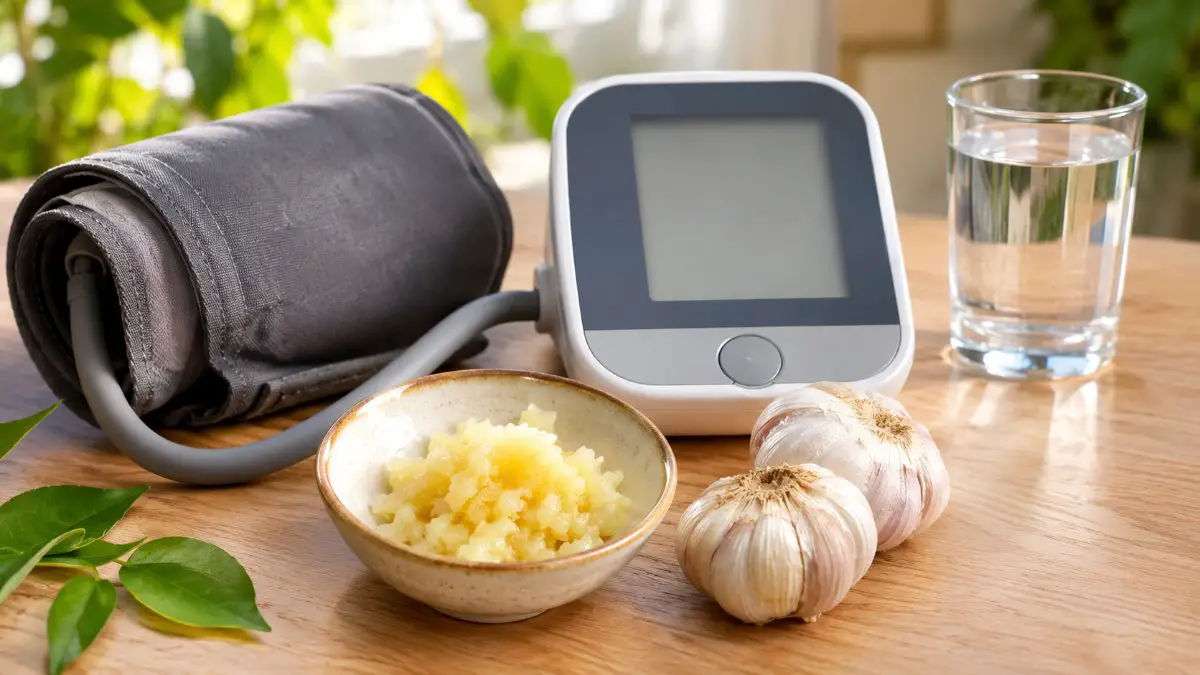
Garlic is one of the most studied kitchen foods for heart health. In people with high blood pressure, reviews of clinical trials found that garlic supplements, especially aged garlic extract, lowered systolic BP by around 8 mmHg and diastolic BP by around 6 mmHg on average. In people with normal BP, the effect was small or absent.
Three points keep this in perspective:
- Most trials used standardised garlic extract or powder, not kitchen garlic, so the dose was controlled.
- The drop is modest. It can support a healthy routine but does not replace BP medicine.
- Never stop or reduce prescribed BP tablets on your own because you started eating garlic.
Garlic in Ayurveda
In Ayurveda, garlic is called Lashuna or Rasona. It is described as hot in potency (ushna) and pungent, and is traditionally used to balance Vata and Kapha, support digestion and keep the channels of circulation clear. Because it is heating, Ayurveda also advises caution for people with a Pitta-dominant body, acidity, ulcers or bleeding tendencies. Taking it with food, or with a little ghee, is a traditional way to make it gentler.
How Much Garlic per Day?
For most healthy adults, 1–2 fresh cloves a day with food is a common kitchen amount. More is not better: larger amounts raise the chance of acidity, bad breath, body odour and stomach upset. Garlic supplements and extracts have their own doses, which should follow the label or your doctor’s advice.
Simple Ways to Follow the Garlic 10-Minute Rule
- Garlic chutney: crush garlic with salt and red chilli, rest 10 minutes, mix with a little oil and eat with roti.
- Finishing tadka: add rested crushed garlic to dal in the last minute instead of at the start.
- Curd or raita: stir in a small amount of rested crushed garlic.
- With honey: some people mix rested crushed garlic with a teaspoon of honey and take it after a meal.
Who Should Be Careful With Daily Garlic
- People on blood thinners such as warfarin, aspirin or clopidogrel: garlic can add to the bleeding effect.
- Before surgery or dental extraction: doctors often advise stopping garlic supplements about 7 days before.
- People with acidity, GERD or ulcers: raw garlic can worsen burning.
- People on certain HIV medicines (such as saquinavir): garlic supplements can lower their levels.
- Pregnant and breastfeeding women: normal food amounts are fine, but ask your doctor before supplements.
- Allergy: stop if you notice rash, itching or swelling.
Garlic 10-Minute Rule: Myths vs Facts
| Myth | Fact |
|---|---|
| Garlic’s benefit is already inside the clove | Allicin forms only after garlic is crushed, chopped or chewed |
| Frying garlic first in the tadka gives the most benefit | High heat stops the enzyme; resting it and adding it late keeps more |
| Swallowing a whole clove works like a tablet | An uncrushed clove makes very little allicin |
| Raw garlic on an empty stomach works best | No proof of extra benefit; it often causes acidity, so take it with food |
| More garlic means more benefit | 1–2 cloves a day is enough; more mainly adds side effects |
| Garlic can replace BP medicine | Garlic lowers high BP only slightly; never stop prescribed tablets |
| Garlic is safe for everyone in any amount | People on blood thinners or before surgery need a doctor’s advice |
Frequently Asked Questions
1. What is the garlic 10-minute rule?
Crush or chop garlic, leave it for about 10 minutes, then eat it or add it at the end of cooking. This gives the enzyme time to form allicin before heat stops it.
2. What is allicin?
Allicin is the sulfur compound that forms when garlic is crushed. It gives garlic its sharp smell and is linked to many of its heart benefits.
3. Does cooking destroy garlic’s benefits?
High heat reduces them, especially if garlic is heated right after chopping. Following the garlic 10-minute rule, resting it first and adding it late, keeps more of its activity.
4. Is raw garlic better than cooked garlic?
Raw crushed garlic gives the most allicin. Cooked garlic still has some benefit, especially when it was rested before cooking.
5. Can I swallow garlic cloves whole?
You can, but very little allicin forms because the clove is not crushed. Crush or chew it first if you want the benefit.
6. Should I eat garlic on an empty stomach?
There is no proof it works better that way, and it often causes burning. Most people do better taking it with a meal.
7. How many garlic cloves should I eat a day?
For most healthy adults, 1–2 fresh cloves a day with food is enough.
8. Does garlic lower blood pressure?
Yes, slightly, in people with high BP. Trials, mostly with garlic extract, found an average drop of about 8 mmHg systolic.
9. Can garlic replace BP medicine?
No. The effect is modest. Keep taking your prescribed medicine and discuss any change with your doctor.
10. Does chopping work as well as crushing?
Yes. Any method that breaks the cells, such as crushing, fine chopping, grating or chewing, starts allicin formation. Crushing breaks more cells.
11. Can I crush garlic in the morning and use it in the evening?
Allicin is unstable and breaks down over hours at room temperature. For the most benefit, crush it fresh, about 10 minutes before use.
12. Is garlic with honey good?
It is a traditional combination and can make raw garlic easier to take. Use rested crushed garlic and take it after a meal.
13. Does garlic help cholesterol?
Some studies show a small drop in total and LDL cholesterol with garlic supplements. The effect varies between studies.
14. Can people on blood thinners eat garlic?
Normal amounts in food are usually fine, but daily raw garlic or supplements can add to the bleeding effect. Ask your doctor first.
15. Should I stop garlic before surgery?
Doctors often advise stopping garlic supplements about 7 days before surgery. Tell your surgeon if you take garlic daily.
16. Why does garlic cause acidity?
Raw garlic is pungent and irritating to the stomach lining. Taking it with food or in smaller amounts helps.
17. Is black garlic or aged garlic extract the same?
No. They are processed forms with little allicin but other stable compounds. Aged garlic extract is the form used in many BP trials.
18. Can pregnant women eat garlic?
Normal food amounts are generally fine. Ask your doctor before taking garlic supplements.
19. What does Ayurveda say about garlic?
Ayurveda calls it Lashuna. It is hot in nature, balances Vata and Kapha, and should be used carefully by people with Pitta or acidity.
20. How do I reduce garlic breath?
Eat it with a meal, drink water, and chew fennel (saunf) or a few mint leaves afterwards.
Scientific Research Behind the Garlic 10-Minute Rule
- The 10-minute wait before heating: Song and Milner, Journal of Nutrition, 2001 found that 60 seconds of microwave heating or 45 minutes of oven heating wiped out garlic’s anticancer activity in a lab model. When crushed garlic stood for 10 minutes before heating, part of that activity was kept. The authors linked this to alliinase, which heat destroys.
- Crushing before cooking: Cavagnaro and colleagues, Journal of Agricultural and Food Chemistry, 2007 reported that lightly cooked, crushed garlic kept most of the antiplatelet activity of raw garlic, while uncrushed garlic lost more when cooked.
- Blood pressure: Ried, Journal of Nutrition, 2016 pooled trials in people with high BP and found garlic preparations lowered systolic BP by about 8.7 mmHg and diastolic BP by about 6.1 mmHg compared with placebo. Most trials used garlic supplements such as aged garlic extract.
Conclusion: Make the Garlic 10-Minute Rule a Habit
Garlic works best when you let it do its own chemistry. Follow the garlic 10-minute rule: crush or chop 1–2 cloves, wait about 10 minutes, and then eat them with food or add them at the end of cooking. Avoid throwing fresh garlic straight into hot oil, swallowing it whole or chewing it raw on an empty stomach. Garlic can support healthy blood pressure as part of a good diet, but it is a helper, not a replacement for medicine.
Medical Disclaimer
This article is for general education only and is not a substitute for professional medical advice, diagnosis or treatment. If you have high blood pressure, take blood thinners, have a bleeding disorder, are pregnant, or have surgery planned, speak to your doctor before making garlic a daily habit or taking garlic supplements. Never stop or change prescribed medicine on your own.
Medically reviewed by Dr. Arun Jharwal, BAMS, MD (Ayurveda)