
How to Eat Halim Seeds: Soaking, Simple Recipes and Side Effects
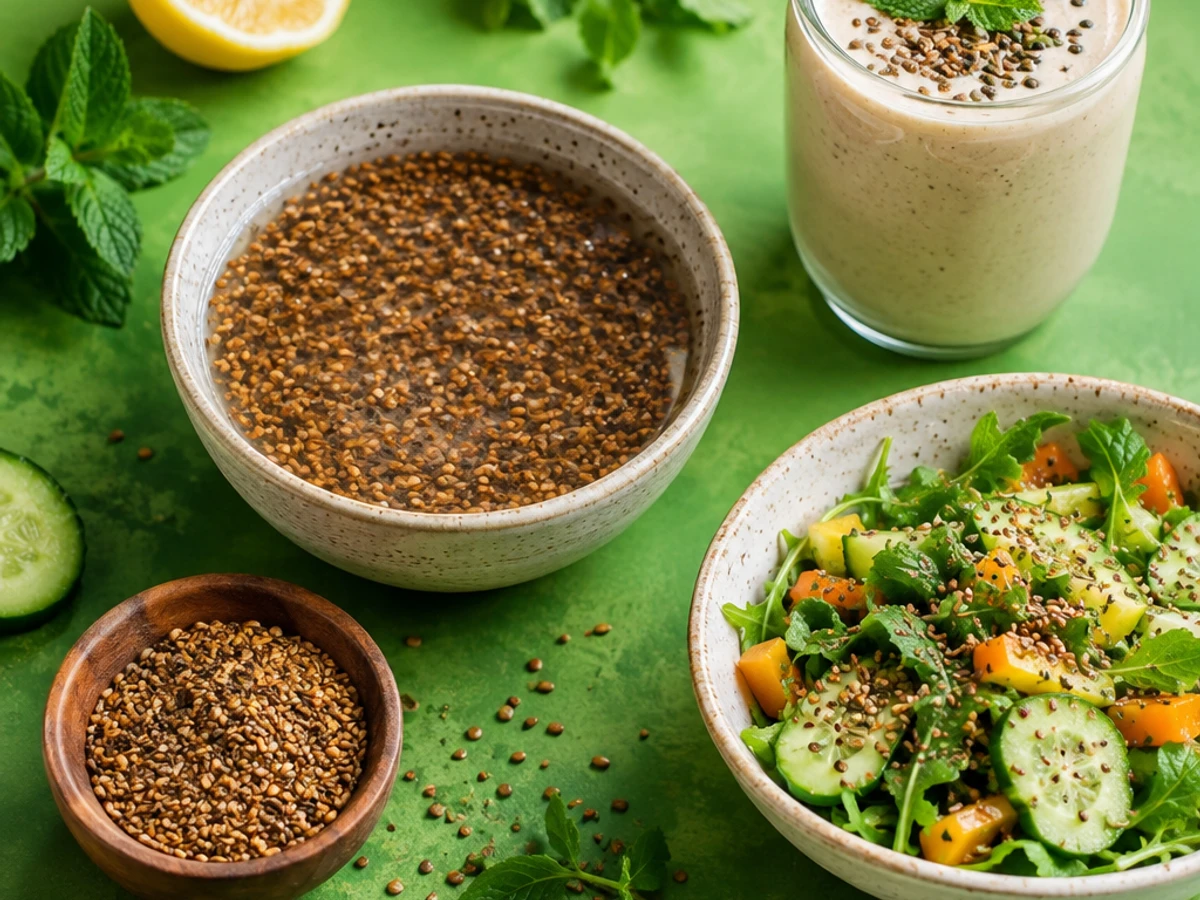
halim seeds : how to consume | Updated October 2026 | Anantam Ayurveda Team, medically reviewed by Dr. Arun Jharwal, BAMS, MD (Ayurveda) | 10 minutes active, 2-8 hours soaking | Easy
The simplest answer to how to consume halim seeds is this: soak them in water until each seed is wrapped in a soft gel, then add a small spoonful to lemon water, a kheer-style dish, poha or a traditional halim laddoo. Keep the amount small, pair them with a vitamin C food for better iron absorption, and keep tea and milk away from the same meal if iron is your goal. This guide, How to Eat Halim Seeds: Soaking, Simple Recipes and Side Effects, shows you how to soak them, three easy ways to eat them, how much is sensible and who should be careful.
Halim seeds work best as a small, regular part of your food, not as a large daily dose taken like medicine.
What You’ll Learn
By the end of this guide you’ll know exactly how to eat halim seeds safely at home. In short: rinse a teaspoon or so of seeds, soak them in water for at least two hours (or overnight), and add them to lemon water, laddoo or your everyday dishes. The right amount for you should be confirmed with your doctor, because no study has set a standard daily dose.
- Soaking: A simple step-by-step method.
- Recipes: Halim lemon water, halim laddoo and sprinkling on dishes.
- Iron tips: What to pair halim with, and what to avoid.
- Amount: How to think about a sensible portion.
- Side effects: What’s known, what isn’t, and who should avoid halim.
The Process at a Glance
| Step | Action | Time | Outcome |
|---|---|---|---|
| 1 | Understand the basic method | 2 min | Know what you’re aiming for |
| 2 | Soak the seeds properly | 5 min + 2-8 hours | Soft, gel-coated seeds |
| 3 | Choose a simple recipe | 10-30 min | Halim ready to eat |
| 4 | Pair for better iron absorption | 1 min | More iron from each serving |
| 5 | Decide how much to eat | 2 min | A small, sensible portion |
| 6 | Know the side effects | 3 min | Use halim safely |
| 7 | Check who should avoid it | 3 min | Safe use for your family |
| 8 | Get quick answers | 2 min | Common doubts cleared |
Step 1: Understand the Basic Way to Eat Halim Seeds
Halim seeds (garden cress, also called aliv or chandrashoor) are tiny, hard and slightly peppery when dry. Soaking softens them and creates a gel coating, which makes them easier to swallow and to mix into food. Almost every traditional way of eating halim starts with soaking.
- Always soak first: Dry seeds are hard to chew and swell in the stomach.
- Keep portions small: Traditional recipes use teaspoons, not tablespoons.
- Think food, not medicine: Add halim to meals and snacks rather than taking it on its own in large amounts.
- Pair with vitamin C: Lemon or amla helps your body absorb halim’s plant iron.
Key Takeaway: Soak, keep it small and combine it with everyday food.
Step 2: Soak Halim Seeds Step by Step
Soaking is the most important step in how to eat halim seeds. It takes only a few minutes of work.
- Measure: Take a small amount, about a teaspoon, or the amount your doctor suggests.
- Rinse: Put the seeds in a fine strainer and rinse briefly under clean water to remove dust.
- Add water: Place them in a clean glass or bowl with about half a cup of drinking water. Avoid milk if you’re eating halim for iron.
- Soak: Leave for at least 2 hours, or overnight in the fridge. The seeds will swell and form a clear gel.
- Check: Soaked seeds should look plump and slippery. If they smell sour or unpleasant, throw them away.
- Use within a day: Soaked seeds are best used the same day or next morning.
| Soaking time | Texture | Best for |
|---|---|---|
| 30 minutes | Slightly soft, little gel | Sprinkling on dishes |
| 2-4 hours | Soft with a clear gel | Lemon water, drinks |
| Overnight (in the fridge) | Fully swollen, very soft | Morning drinks, kheer, laddoo |
These timings are practical kitchen guidance, not medical rules; adjust them to taste and to your doctor’s advice.
Step 3: Choose One of Three Simple Ways to Eat Halim
Here are three easy, traditional ways to use halim seeds at home.
Option 1: Halim lemon water (best for iron)
- Prepare: Add a spoonful of soaked halim seeds to a glass of drinking water.
- Add lemon: Squeeze in half a lemon, or add a little amla juice.
- Sweeten lightly if needed: A small amount of jaggery, or none at all.
- Drink: Mid-morning or between meals, away from tea.
Option 2: Halim laddoo (chandrashoor laddu)
This is the classic postpartum and winter recipe in many Indian homes. It is nourishing but also rich, because of jaggery and ghee.
| Ingredient | Amount (makes about 12 small laddoos) |
|---|---|
| Halim seeds | ¼ cup, soaked in a little water for 1-2 hours |
| Grated fresh or dry coconut | 1 cup |
| Jaggery (grated) | ¾ cup |
| Ghee | 1-2 teaspoons |
| Cardamom powder and chopped nuts | To taste |
- Combine: Mix soaked halim seeds, coconut and jaggery in a heavy pan.
- Cook gently: Stir on low heat until the mixture thickens and leaves the sides of the pan.
- Add flavour: Stir in ghee, cardamom and chopped nuts or munakka.
- Shape: Cool slightly and roll into small laddoos.
- Store: Keep in an airtight box in the fridge and eat within about a week.
If you have diabetes: Jaggery and ghee add sugar and fat, so keep to one small laddoo and count it as a sweet. Dried grapes like munakka are a traditional addition; read how many munakka to eat in a day.
Option 3: Sprinkle on everyday dishes
- Poha or upma: Add a spoon of soaked seeds and finish with lemon juice.
- Salads and raita: Stir in soaked seeds for texture (raita has milk, so it’s not ideal when iron is the goal).
- Dal or khichdi: Sprinkle a little just before serving.
- Kheer-style dishes: A traditional option, though milk reduces iron absorption.
Storing dry halim seeds
Keep dry seeds in a clean, airtight glass jar in a cool, dry cupboard, away from steam and sunlight. Use a dry spoon every time, and check for insects or a musty smell before use. Buying smaller packs and using them within a few months keeps them fresh.
Step 4: Pair Halim for Better Iron Absorption
Halim’s iron is plant (non-haem) iron, which the body absorbs less easily than iron from meat, fish or eggs. A systematic review in the Proceedings of the Nutrition Society found that vitamin C moderately increases plant-iron absorption, so what you eat alongside halim matters.
| Pair with | Keep apart from | Why |
|---|---|---|
| Lemon, amla, guava, orange, tomato | Tea and coffee (for about an hour) | Vitamin C helps; tannins block iron |
| Water or lemon water | Milk, curd or calcium tablets at the same time | Calcium competes with iron |
| Other iron foods: greens, dals, jaggery in moderation | Large amounts of bran at the same meal | Phytates in bran reduce iron uptake |
Halim with lemon water is the iron-friendly way. Halim in milky chai is the least helpful way.
Step 5: Decide How Much to Eat Per Day
There is no established daily dose of halim seeds; none of the published sources we reviewed sets one. Traditional recipes typically use about one to two teaspoons of seeds per serving, but the right amount for you should be confirmed with your doctor.
- Start small: A small spoonful, soaked, a few times a week.
- Confirm with your doctor: Especially if you have anaemia, a thyroid condition, diabetes or take regular medicines.
- Don’t increase to “boost” iron: More isn’t better; eat a variety of iron-rich foods instead.
- Take breaks: Halim is a traditional seasonal food, often eaten more in winter and after childbirth.
What the research tested
Small Indian studies, such as one archived on Krishikosh, gave anaemic adolescent girls halim laddoos or health mixes daily and reported improved haemoglobin. These were small studies with whole recipes, so they don’t give a precise “dose” of seeds to copy.
Step 6: Know the Side Effects of Halim Seeds
Halim is a traditional food, but human safety data are limited. The 2024 review of garden cress seeds notes that more human trials are needed, and it highlights traditional use to bring on periods, which is why pregnancy needs particular caution.
| Possible issue | What’s known | What to do |
|---|---|---|
| Bloating or discomfort | Common with seeds rich in fibre and gel, especially unsoaked | Always soak; start small; drink water |
| Warming effect | Traditionally considered “garam” in taseer | Reduce in summer or if you feel heat or acidity |
| Pregnancy | Traditional emmenagogue and abortifacient use; safety data missing | Ask your doctor before regular use |
| Thyroid | Mustard-family plants can affect the thyroid in large amounts | Ask your doctor if you have thyroid disease |
| Long-term high intake | Not well studied | Keep amounts small |
Halim seeds nuksan (side effects) in simple words
Kam maatra mein, bhigo kar, halim zyaadatar logon ke liye theek hai. Zyada lene se pet phoolna, garmi ya acidity ho sakti hai. Garbhavastha mein doctor se poochhe bina regular na lein.
Key Takeaway: Because human safety data are limited, small amounts and medical advice are the sensible approach.
Watch Dr. Arun Jharwal explain it on video
Get simple Ayurvedic tips, home remedies and health guidance on our YouTube channel.
Step 7: Check Who Should Avoid Halim Seeds
Some people should avoid halim or talk to a doctor before using it.
- Pregnant women: Garden cress has traditional use to bring on periods and is described as an abortifacient in traditional texts; safety data are missing. Avoid regular use unless your doctor approves.
- People with diagnosed anaemia: Halim can support your diet, but it isn’t a replacement for iron tablets or the treatment your doctor prescribes.
- People with thyroid conditions on treatment: Ask your doctor first.
- Children: Small amounts in family food are traditional, but don’t give halim as a supplement without medical advice.
- People with diabetes: Watch the jaggery and ghee in halim laddoos.
- Anyone on regular medicines: Check with your doctor before adding any herbal food in large amounts.
For guidance on fitting traditional foods into your constitution, see our guide to Ayurvedic diet and nutrition.
Step 8: Get Quick Answers on Eating Halim
Here are short answers to the questions people ask most.
- How to consume halim seeds? Soak first, then add a small spoon to lemon water, laddoo or dishes.
- How to eat halim seeds? Always soaked, never as dry spoonfuls.
- How to use halim seeds? In drinks, laddoos, poha, upma or kheer-style dishes.
- How to use garden cress seeds? Exactly the same; halim and garden cress seeds are the same thing.
- Halim ke beej kaise khaye? Bhigo kar, nimbu paani ya laddoo mein, kam maatra mein.
What to Do After You Start
- Phase 1, the first week: Try a small spoon of soaked seeds in lemon water a few times and notice how your digestion feels.
- Phase 2, the next month: Build an iron-friendly routine with halim, greens, dals and a vitamin C food at meals, and keep tea away from meals.
- Phase 3, ongoing: If you have low haemoglobin, recheck your blood with your doctor after a few months to see whether your plan is working.
Resources You’ll Need
| Resource | What it’s for | Label |
|---|---|---|
| Clean halim (garden cress) seeds | The main ingredient | Required |
| Fine strainer and glass bowl | Rinsing and soaking | Required |
| Lemon or amla | Better iron absorption | Recommended |
| Anantam Ayurveda consultation | Personal advice on how much is right for you | Recommended |
| Jaggery, coconut and ghee | For halim laddoo | Optional |
Troubleshooting Common Issues
| Problem | Cause | Fix |
|---|---|---|
| Seeds still hard | Not soaked long enough | Soak for at least 2 hours or overnight |
| Bloating | Too much, or unsoaked seeds | Use less and always soak |
| Feeling of heat or acidity | Warming taseer or large amounts | Reduce the amount, especially in summer |
| Laddoos too sweet | Too much jaggery | Cut jaggery by a third and add more coconut |
| Haemoglobin not improving | Diet alone may not be enough | See your doctor; you may need iron tablets |
Conclusion
Knowing how to consume halim seeds comes down to a few habits: soak them first, use small amounts, pair them with lemon or amla, and keep tea and milk away from the same meal when iron is the goal. Enjoy them in lemon water, laddoos or everyday dishes, and confirm the right amount with your doctor, especially if you are pregnant, anaemic or have a thyroid condition.
Not sure how much halim is right for you? Ask our Ayurveda doctor: book a consultation with Dr. Arun Jharwal at Anantam Ayurveda.
FAQ
How to eat halim seeds: soaking, simple recipes and side effects?
How to Eat Halim Seeds: Soaking, Simple Recipes and Side Effects, in short: rinse a small amount of halim seeds, soak them in water for at least 2 hours or overnight until gel-coated, then add them to lemon water, halim laddoo, poha or other dishes. Pair them with lemon or amla and avoid tea or milk at the same meal for better iron absorption. Side effects can include bloating and a warming effect, and pregnant women should ask a doctor before regular use. There’s no established dose, so confirm the amount with your doctor.
How to consume halim seeds?
Soak them first, then add a small spoonful to lemon water, laddoo or everyday dishes like poha.
How to use halim seeds for iron?
Take soaked seeds in lemon water or with a vitamin C food, and keep tea, coffee and milk away from that meal.
How to use garden cress seeds?
Garden cress seeds are halim seeds, so use them the same way: soaked, in small amounts, in drinks or food.
Halim ke beej kaise khaye?
Halim ke beej ko 2 ghante ya raat bhar bhigo kar nimbu paani, laddoo ya poha mein milakar khayein. Chai ya doodh ke saath na lein, aur maatra doctor se confirm karein.
Can I eat halim seeds without soaking?
It’s better not to. Unsoaked seeds are hard to chew and can cause discomfort as they swell.
Can I eat halim seeds every day?
Small amounts may suit many people, but there’s no established daily dose; ask your doctor, especially if pregnant or on medicines.
Methodology and disclaimer: Information is based on a 2024 review of garden cress seeds (PMC11167195), a systematic review on vitamin C and iron absorption (Proceedings of the Nutrition Society, 2017) and small Indian studies archived on Krishikosh. Recipes follow traditional home methods; amounts are kitchen guidance, not medical doses. This article is educational and not a substitute for medical advice.