
Is Mustard Oil Really Banned in the USA? Benefits, Risks, and Ayurvedic Truth Explained
Mustard oil has been used in Indian kitchens and Ayurvedic practices for centuries. From cooking traditional meals to massaging the body and supporting oral health, this oil holds a special place in many households. However, in recent years, social media discussions around “mustard oil being banned in America” have created confusion and concern among people.
Many individuals now wonder whether it is harmful, whether it affects the heart, and whether it is safer or healthier than refined oils like canola oil or olive oil. Some people have even stopped using mustard oil out of fear, while others continue to use it without understanding its proper applications and limitations.
The truth is more nuanced than viral videos and headlines suggest. Mustard oil has both potential benefits and certain concerns that should be understood scientifically and traditionally. In this article, we will explore mustard oil from both Ayurvedic and modern health perspectives, including its benefits, precautions, traditional uses, and the reality behind the international restrictions.
What Is Mustard Oil?
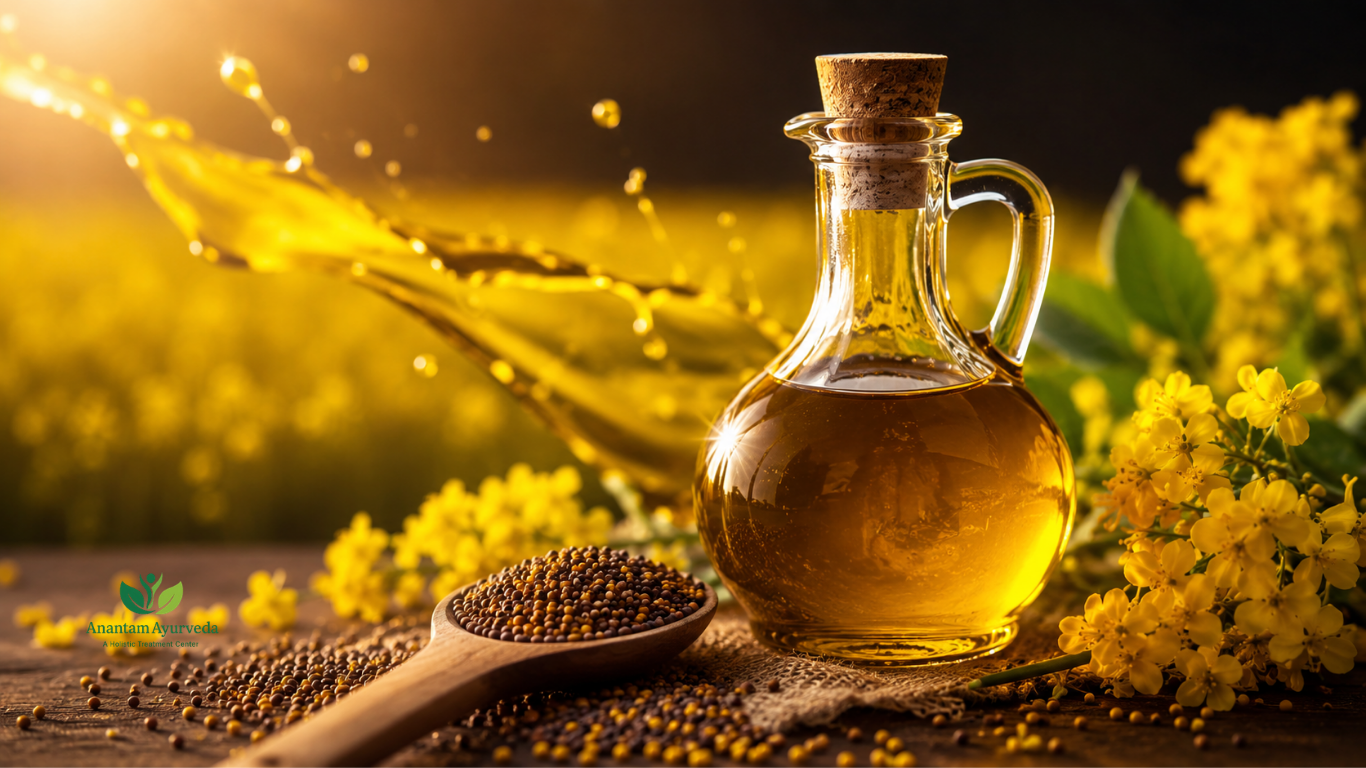
Mustard oil is extracted from mustard seeds (Brassica juncea). It is commonly used in Indian, Bangladeshi, and Pakistani cooking and is known for its strong aroma and pungent taste.
In Ayurveda, it is called Sarshapa Taila. It is considered warming and stimulating in nature.
Ayurvedic Perspective
Rasa (Taste): Katu (pungent)
Guna (Qualities): Laghu (light), Ushna (warm), Tikshna (penetrating)
Virya (Potency): Ushna (heating)
Vipaka: Katu
Dosha Effect: Helps pacify Vata and Kapha; Excessive use may aggravate Pitta in sensitive individuals
Karma (Actions): Deepana (enhances digestion), Lekhana (scraping action)
Traditionally used to support digestion, reduce pain and swelling, improve circulation, and help manage Kapha-related conditions. It is also known for its warming, anti-inflammatory, and anthelmintic properties. Excessive or prolonged use may affect Rakta, Meda, and Shukra dhatus.
Why Is Mustard Oil Restricted in Some Countries?
One of the biggest misconceptions is that mustard oil is completely illegal worldwide. In reality, the situation is more complex.
In countries like the USA, Canada, and parts of Europe, pure mustard oil sold for edible purposes has faced restrictions mainly because of its high erucic acid content. Older animal studies raised concerns that excessive intake of erucic acid could affect heart health in certain situations.
However, it is still widely consumed in India and several Asian countries. Regulatory authorities in different nations follow different safety standards and dietary policies.
It is important to understand that moderate dietary use within a balanced lifestyle is very different from excessive consumption. Also, modern research on traditional oils continues to evolve.
Instead of blindly fearing or glorifying any oil, it is better to focus on moderation, cooking quality, overall diet, and individual body constitution.
Key Benefits of Mustard Oil
1. Supports Heart Health
It contains a combination of monounsaturated fats, polyunsaturated fats, Omega-3 fatty acids, and Omega-6 fatty acids. These healthy fats may help support cardiovascular function when used in moderation as part of a balanced diet.
Some studies suggest that replacing trans fats and repeatedly heated refined oils with healthier traditional oils helps maintain better lipid balance.
People using mustard oil traditionally often believe it supports circulation and helps reduce heaviness after meals. Its warming nature also improve digestion and metabolism according to Ayurveda.
However, excessive oil intake of any kind can contribute to obesity and metabolic problems. Therefore, portion control remains important.
Possible benefits include:
- Better fat balance in the diet
- Support for healthy circulation
- Reduced intake of heavily processed oils
- Improved digestive stimulation
2. Helps Reduce Gum Problems
One of the most popular traditional remedies involves mixing mustard oil with turmeric and salt for gum massage.
In Ayurveda, this combination is believed to help strengthen gums and improve oral hygiene. Turmeric contains curcumin, which has anti-inflammatory and antimicrobial properties, while salt may help reduce bacterial accumulation temporarily.
People with bleeding gums, bad breath, or gum sensitivity sometimes use this home remedy as supportive care.
Traditional Method
- 1 teaspoon mustard oil
- A pinch of turmeric
- A pinch of rock salt
Massage gently over gums for 1–2 minutes and rinse afterward.
This remedy should not replace dental treatment. Persistent gum bleeding, loose teeth, or severe pain require evaluation by a qualified dentist.
3. Supports Digestion According to Ayurveda
It is considered a digestive stimulant in traditional Ayurvedic understanding. Because of its warming and sharp qualities, it may help stimulate appetite and reduce feelings of heaviness after meals.
In colder regions of India, mustard oil is commonly preferred during winter because it provides warmth and may support circulation and metabolism.
Ayurveda also considers it useful in balancing excessive Kapha-related symptoms such as sluggish digestion, mucus accumulation, and lethargy.
Traditionally associated benefits include:
- Improved appetite
- Reduced digestive sluggishness
- Better tolerance to cold weather
- Support for Kapha balance
Individuals with hyperacidity, gastritis, or excessive body heat should use it cautiously.
4. Commonly Used for Body Massage
It is widely used for external massage in Indian households. Its warming effect may help reduce stiffness and improve comfort in muscles and joints.
Many people use lukewarm mustard oil during winter for:
- Body massage
- Foot massage
- Joint stiffness
- Muscle fatigue
Ayurveda believes oil massage supports circulation, nourishes tissues, and calms aggravated Vata.
Some people may experience skin irritation due to its pungent nature. Therefore, a patch test is advisable before extensive use.
5. Better Than Repeatedly Heated Refined Oils
One important issue today is not just which oil people use, but how oils are used.
Repeatedly reheating refined oils can generate harmful compounds and oxidative stress. Many street foods and processed foods contain oils that are heated multiple times.
Traditional cold-pressed mustard oil, when used appropriately and not overheated excessively, may be a preferable option compared to repeatedly reused industrial oils.
The quality of the oil matters significantly:
- Choose cold-pressed or kachi ghani mustard oil
- Avoid adulterated oils
- Store properly away from sunlight
- Do not repeatedly deep fry in the same oil
How to Use Mustard Oil Safely
For Cooking
- Use 1–2 tablespoons in cooking as part of a balanced diet
- Prefer cold-pressed mustard oil
- Heat moderately before cooking to reduce pungency
For Gum Massage
Ingredients
- 1 teaspoon mustard oil
- A pinch of turmeric
- A pinch of rock salt
Method
Massage gently over gums for 1–2 minutes once daily for 5–7 days.
For Massage
- Warm slightly before use
- Apply gently on joints or body
- Wash off if irritation occurs
Who Should Avoid or Use Caution?
Although mustard oil may offer benefits, it is not suitable for everyone.
Use Caution If You Have:
- Severe acidity or gastritis
- Mouth ulcers aggravated by heat
- Sensitive skin or allergies
- Chronic liver disease
- High-risk cardiovascular conditions
Moderate dietary use is generally common in Indian households, but excessive medicinal use or self-treatment should be avoided without medical guidance.
Frequently Asked Questions (FAQs)
1. Is mustard oil completely banned in the USA?
Not exactly. Restrictions mainly relate to its sale for edible purposes due to erucic acid concerns. It is not “illegal” in every form.
2. Is it healthier than refined oil?
Cold-pressed mustard oil may be preferable to heavily processed or repeatedly heated oils when used in moderation.
3. Can mustard oil reduce cholesterol?
Mustard oil alone cannot cure high cholesterol. However, healthier fat choices within an overall balanced lifestyle may support better lipid management.
4. Is it good for gums?
Traditional use suggests benefits for gum massage, but persistent dental problems require professional care.
5. Can everyone consume it daily?
Moderate use may suit many individuals, but people with Pitta aggravation, acidity, or certain medical conditions should be cautious.
6. Which mustard oil is best?
Traditionally prepared cold-pressed or kachi ghani mustard oil is generally preferred.
Doctor’s Advice
Mustard oil should neither be blindly feared nor treated as a miracle solution. In Ayurveda, the suitability of any food depends on:
- Individual constitution (Prakriti)
- Digestive strength (Agni)
- Season
- Quantity
- Lifestyle
A healthy lifestyle involves much more than selecting one “perfect” oil. Sleep quality, physical activity, stress management, fresh food intake, and avoiding processed foods are equally important.
If you already have heart disease, severe digestive disorders, or chronic illness, avoid self-medication based only on social media information. Personalized medical advice is always safer.
Conclusion
Mustard oil remains an important traditional oil in Indian culture and Ayurveda. It offers potential benefits related to digestion, circulation, massage, and oral care when used wisely and in moderation.
The controversy surrounding mustard oil mainly comes from differing international safety standards and research interpretations. Rather than reacting emotionally to viral claims, it is better to make informed, balanced decisions based on quality, quantity, and overall lifestyle.
Choose pure oils, avoid excessive consumption, and focus on long-term healthy habits instead of quick health trends.
For more evidence-aware Ayurvedic health insights, natural lifestyle guidance, and practical wellness education, continue following trusted medical sources and consult qualified professionals whenever needed.
Here you can read about Why Is Guava Considered One of the Most Powerful Fruits?
You can follow us on twitter, facebook, instagram & Google News