
Ayurvedic Foot Massage Benefits : Can Applying Oil on the Soles Before Sleep Improve Sleep, Pain, and Fatigue?
Introduction
In Ayurveda, the feet are considered highly important because they contain several vital energy points connected to different organs and systems of the body. Traditional texts describe Ayurvedic foot massage, also known as Padabhyanga, as a calming nightly ritual that may help relax the nervous system, support circulation, reduce dryness, and improve sleep quality.
Modern lifestyle habits such as stress, poor sleep, long working hours, excessive screen time, and standing for prolonged periods can silently affect overall health. Many people experience symptoms like disturbed sleep, cracked heels, headaches, body pain, fatigue, and mental restlessness without realizing that even simple daily self-care practices may help support recovery.
Recently, social media has popularized the idea of applying ghee or oils on the soles before sleep. However, many people remain confused about which oil should be used, what benefits are realistic, and who should avoid these remedies.
In this article, we will explore the Ayurvedic perspective, practical methods, possible benefits, precautions, and safe ways to use these traditional remedies at home.
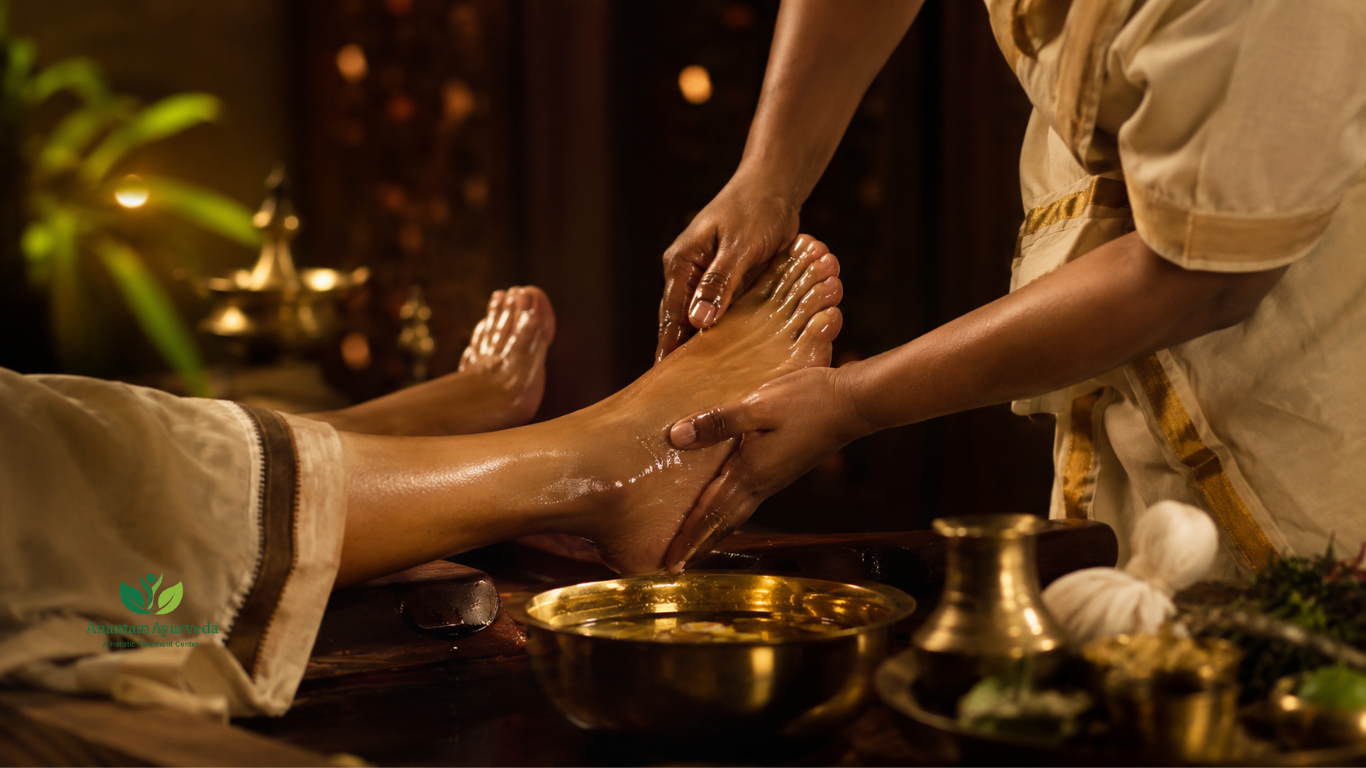
What Is Ayurvedic Foot Massage?
The remedy involves gently massaging the soles of the feet with specific oils or ghee before bedtime. According to Ayurveda, the feet contain important Marma points and nerve endings connected with the nervous system, eyes, muscles, joints, and mental relaxation.
Different oils are selected according to their Ayurvedic properties and intended effects.
Ayurvedic Perspective
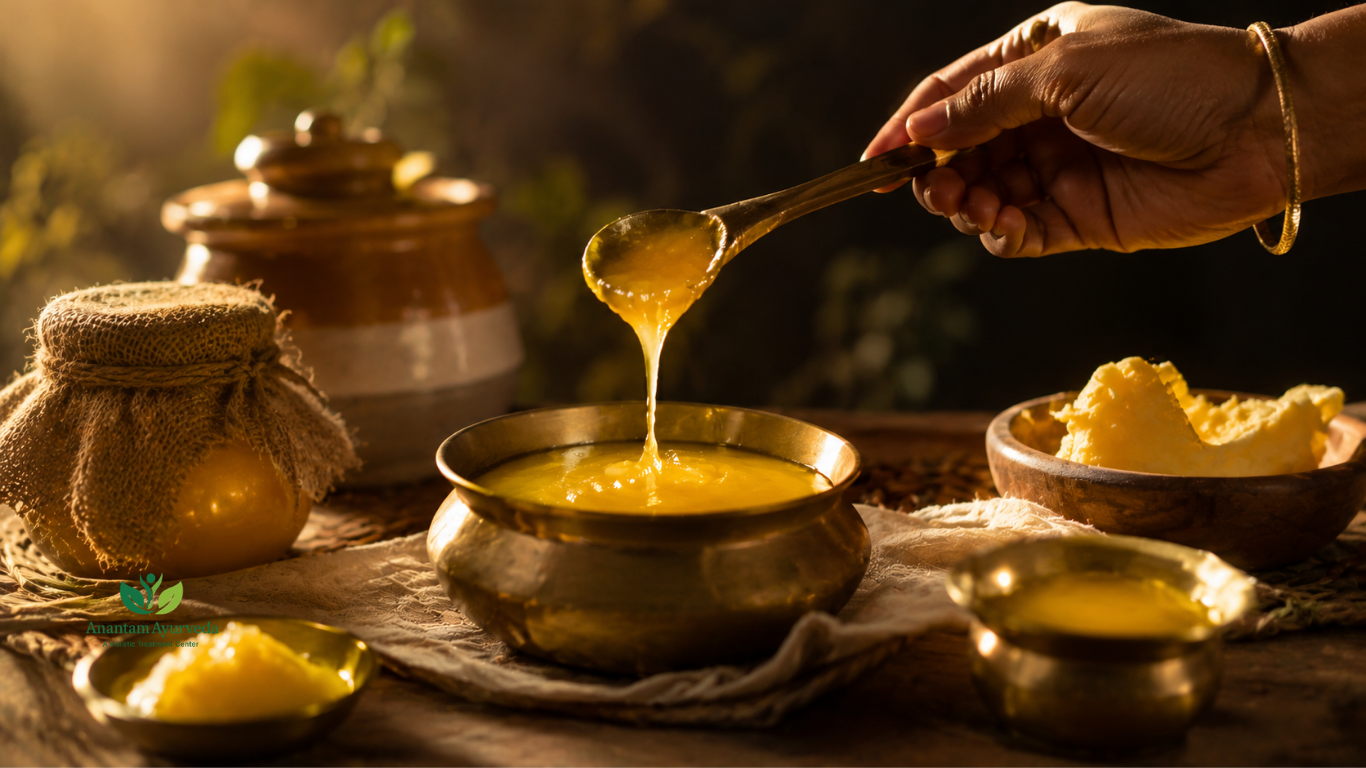
1. Cow Ghee (Ghrita)
- Rasa (Taste): Madhura (sweet)
- Guna (Qualities): Snigdha (unctuous), Mridu (soft)
- Virya (Potency): Sheeta (cooling)
- Vipaka: Madhura
- Dosha Effect: Helps calm Vata and Pitta
Traditionally used to support relaxation, dryness, and sleep disturbances.
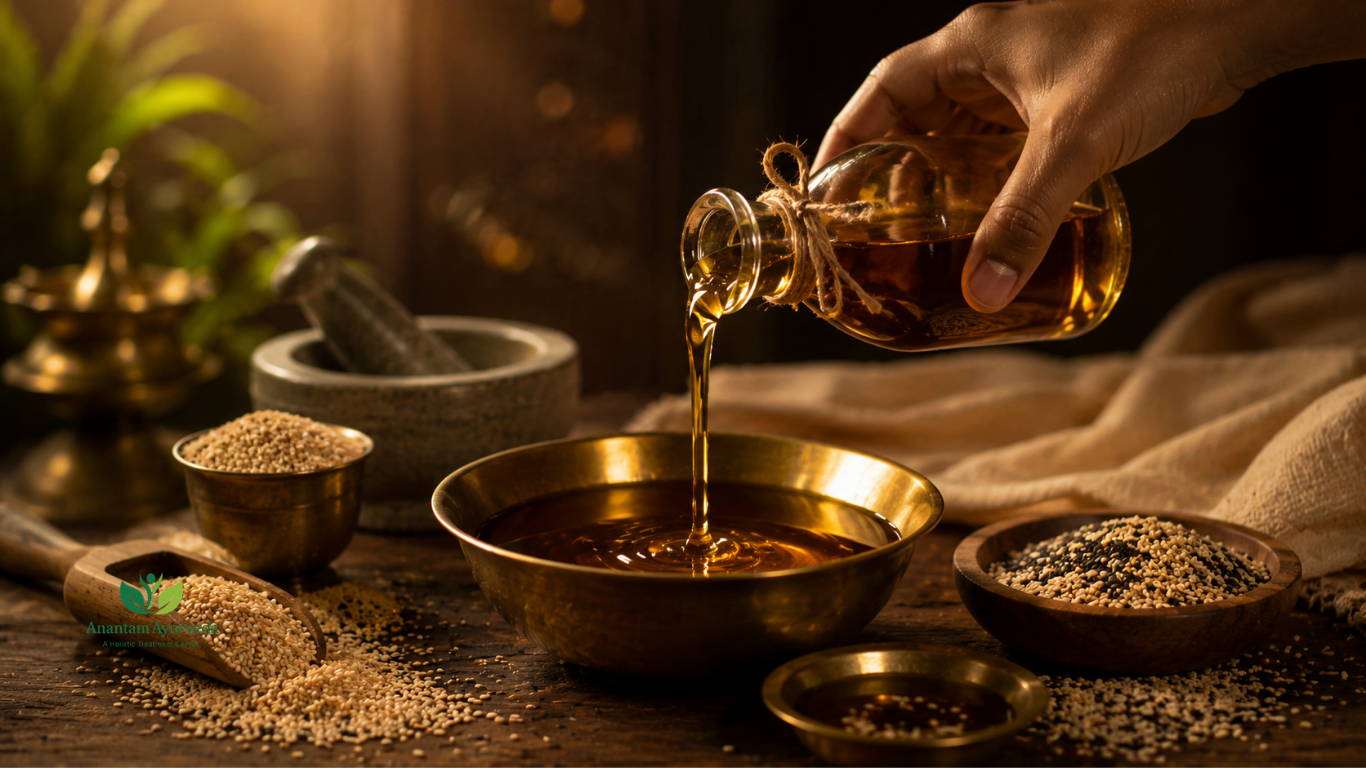
2. Sesame Oil (Til Taila)
- Rasa (Taste): Madhura (sweet), Tikta (bitter), Kashaya (astringent)
- Guna (Qualities): Sukshma (subtle), Vyavayi (quickly absorbed), Teekshna (penetrating), Vishada (clear), Guru (heavy), Sara (promotes bowel movement), Vikasi (loosens joints), Lekhana (scraping)
- Virya (Potency): Ushna (heating)
- Vipaka: Madhura
- Dosha Effect: Helps balance Vata and Kapha; may slightly increase Pitta
Traditionally used to nourish the body, support strength, improve skin health, enhance digestion, promote memory and intellect, and rejuvenate the tissues.
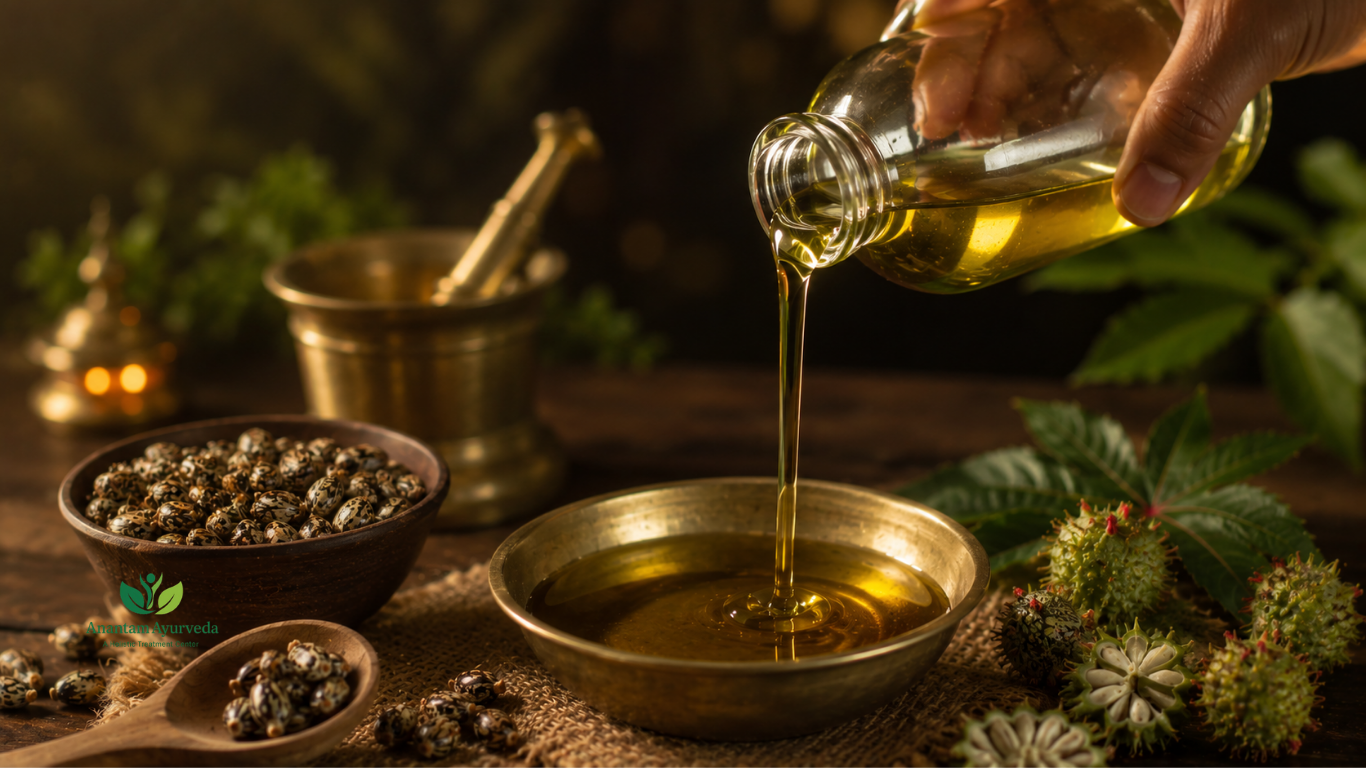
3. Castor Oil (Eranda Taila)
- Rasa (Taste): Madhura (sweet), Tikta (bitter), Katu (pungent), Kashaya Anurasa (astringent sub-taste)
- Guna (Qualities): Guru (heavy), Sara (promotes smooth movement), Teekshna (penetrating), Sookshma (subtle), Picchila (sticky), Visram (strong odor), Balya (strength promoting)
- Virya (Potency): Ushna (heating)
- Vipaka: Madhura
- Dosha Effect: Helps alleviate Vata and Kapha; may increase Pitta
Traditionally used to support bowel movement, relieve Vata-related disorders, promote strength, and aid cleansing and mobility within the body.
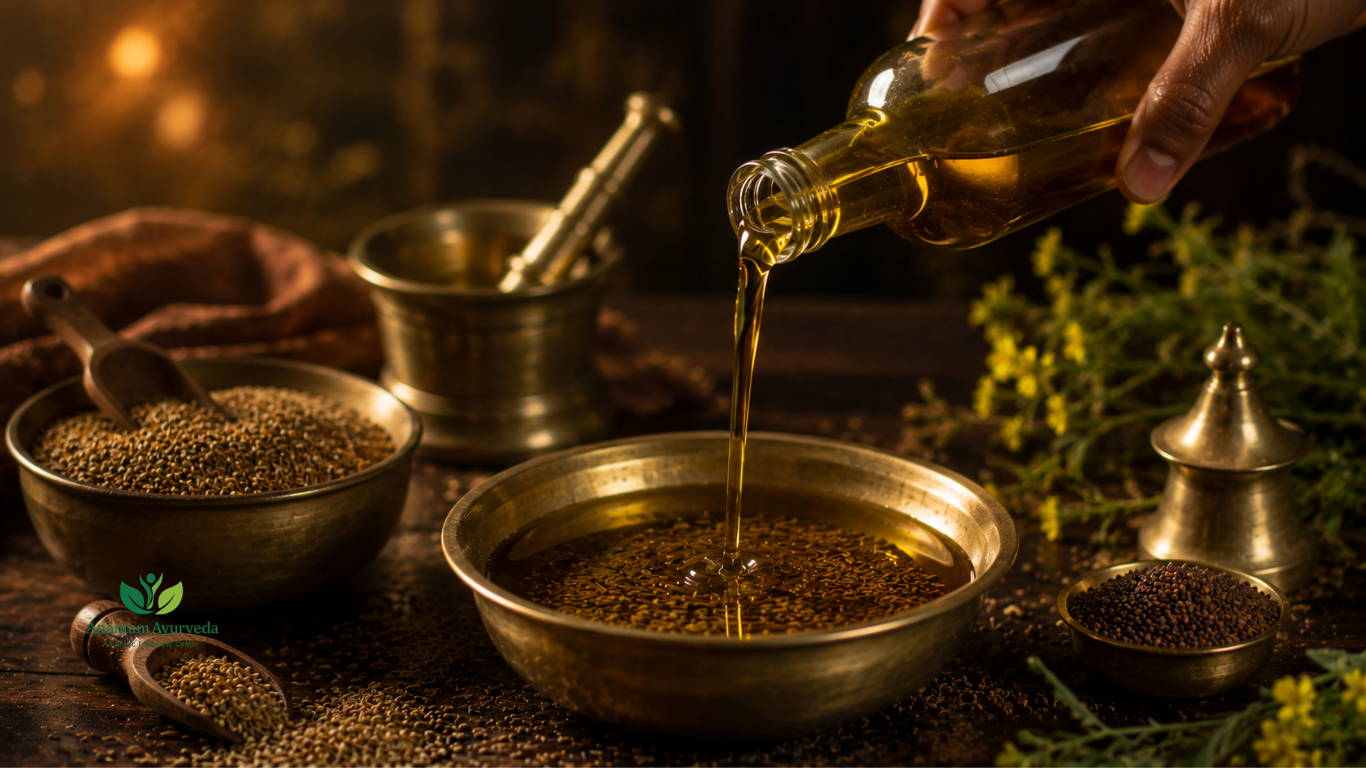
4. Mustard Oil with Ajwain
- Mustard Oil (Sarshapa Taila)
Rasa (Taste): Katu (pungent)
Guna (Qualities): Laghu (light), Ushna (warm), Tikshna (penetrating)
Virya (Potency): Ushna (heating)
Vipaka: Katu
Dosha Effect: Helps pacify Vata and Kapha; may increase Pitta
Karma (Actions): Deepana (enhances digestion), Lekhana (scraping action)
Traditionally used to support digestion, reduce pain and swelling, improve circulation, and help manage Kapha-related conditions. It is also known for its warming, anti-inflammatory, and anthelmintic properties. Excessive or prolonged use may affect Rakta, Meda, and Shukra dhatus.
-
Ajwain (Yavani)
Rasa (Taste): Katu (pungent), Tikta (bitter)
Guna (Qualities): Laghu (light to digest), Rooksha (dry), Teekshna (penetrating)
Virya (Potency): Ushna (heating)
Vipaka: Katu
Dosha Effect: Helps balance Kapha and Vata; may increase Pitta
Traditionally used to support digestion, relieve bloating and gas, stimulate appetite, and promote respiratory and digestive health.
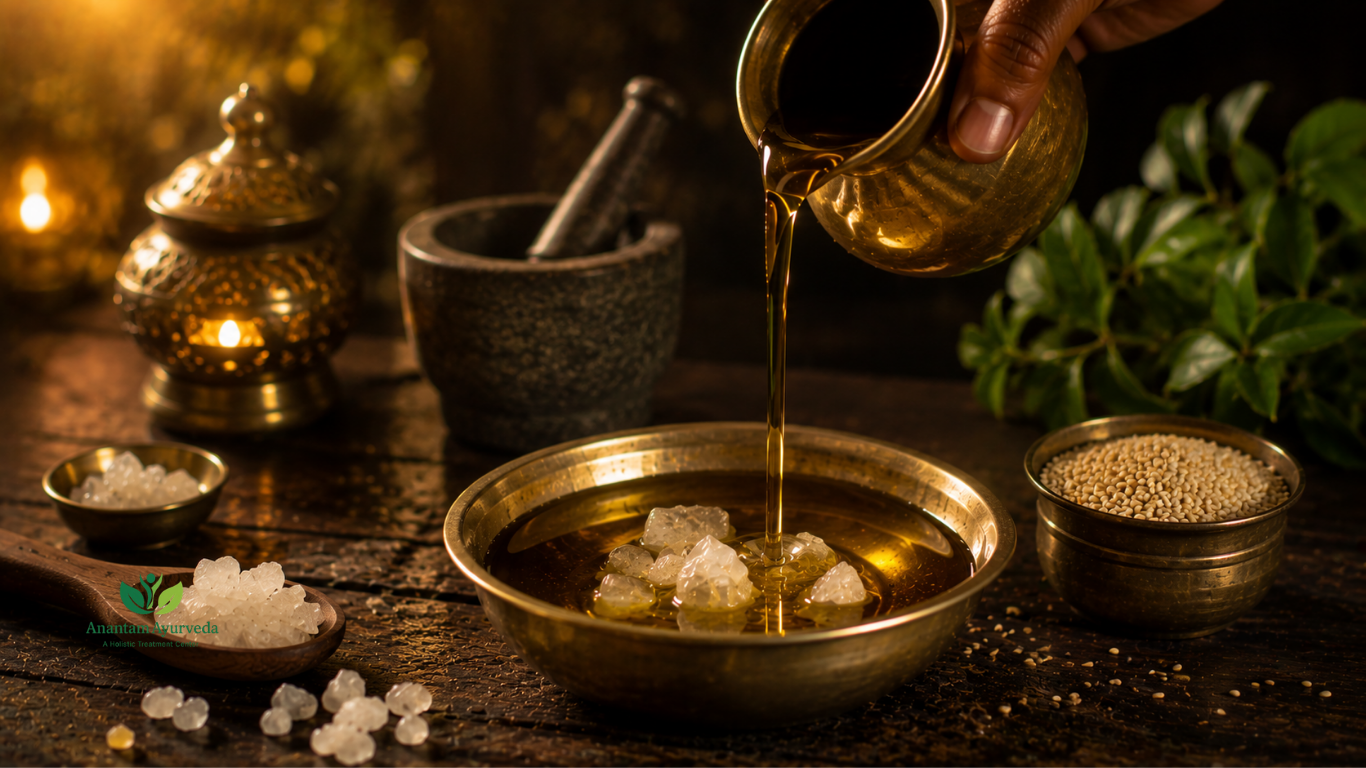
5. Bhimseni Camphor with Sesame Oil
-
Camphor (Karpoora)
Rasa (Taste): Tikta (bitter), Katu (pungent)
Virya (Potency): Sheeta (cooling)
Dosha Effect: Helps balance Kapha dosha
Traditionally used to help relieve burning sensation, excessive thirst, throat discomfort, eye pain, and certain bleeding disorders. It is also valued for its cooling and refreshing properties.
Camphor obtained from within the stem is considered superior in quality. The superior variety is slightly yellowish, while the intermediate type is pure white. White camphor that is rough, firm, and expanded in appearance is traditionally considered externally formed.
Benefits of Ayurvedic Foot Massage Before Sleep
1. May Support Better Sleep and Relaxation
Many individuals experience difficulty falling asleep due to stress, excessive screen exposure, anxiety, or irregular routines. Ayurveda associates disturbed sleep with aggravated Vata and Pitta dosha.
Applying warm cow ghee on the soles before sleep may help create a calming effect on the nervous system. Gentle massage can improve relaxation and may reduce mental restlessness before bedtime.
Some people report:
- Reduced nighttime restlessness
- Better sleep quality
- Calmer mind before sleep
- Less dryness and burning sensation in feet
The soothing touch and warmth of massage itself may activate relaxation pathways in the body. However, this should not replace medical evaluation in severe insomnia, sleep apnea, or chronic anxiety disorders.
2. Helps Reduce Dryness and Cracked Heels
Cracked heels are common in people who walk barefoot, stand for long hours, have dry skin, or experience nutritional imbalance.
Castor oil is traditionally used because of its thick, moisturizing nature. Applying it before sleep and covering the feet with cotton socks may help soften rough skin gradually.
Possible benefits include:
- Reduced dryness
- Softer skin texture
- Improved moisture retention
- Support for mild heel cracks
Consistency is important. Results usually require several days to weeks depending on severity. Deep bleeding cracks, diabetes-related foot problems, or infections should always be examined by a qualified doctor.
3. May Help Relieve Headache and Eye Strain
In Ayurveda, the feet and eyes are believed to have a functional connection through nerve pathways and energy channels.
A gentle massage with warm sesame oil may help relax tension accumulated from:
- Long screen exposure
- Stress
- Mental fatigue
- Excessive travel
- Irregular sleep
People may experience:
- Reduced heaviness around the eyes
- Temporary relief from stress-related headache
- Improved feeling of relaxation
However, persistent headaches, migraine, vision changes, or severe eye pain require professional medical assessment.
4. Supports Circulation and Reduces Fatigue
Long working hours, prolonged sitting, poor sleep, and stress may contribute to fatigue and heaviness in the body.
Traditional home practices often combine sesame oil with Bhimseni camphor for Ayurvedic foot massage to create a stimulating and refreshing effect.
This may help:
- Improve local circulation
- Reduce tiredness
- Provide a refreshing sensation
- Support muscle relaxation
Massage itself improves blood flow temporarily and may help the body feel more relaxed after physical exertion.
People with sensitive skin should use camphor carefully and always in diluted form.
5. May Provide Temporary Relief in Joint Pain and Stiffness
Mustard oil combined with ajwain has traditionally been used in Indian households for external application on painful joints and soles.
The warming nature of mustard oil may help reduce stiffness during cold weather or after physical strain.
Possible supportive benefits:
- Temporary relief from mild joint discomfort
- Reduced feeling of stiffness
- Improved warmth and comfort
This is not a cure for arthritis or inflammatory joint diseases. Persistent swelling, severe pain, fever, or mobility issues require medical consultation.
How to Use These Remedies Safely
1. For Better Sleep
Ingredients:
- 1 teaspoon warm desi cow ghee
Method:
- Wash and dry feet properly
- Apply warm ghee on the soles
- Massage gently for 5–10 minutes before sleep
Duration:
Daily for 2–4 weeks
2. For Cracked Heels
Ingredients:
- 1 teaspoon castor oil
- Cotton socks
Method:
- Apply castor oil on cracked heels
- Wear cotton socks overnight
Frequency:
Daily before sleep
3. For Headache and Eye Strain
Ingredients:
- 1 teaspoon sesame oil
Method:
- Slightly warm the oil
- Massage soles gently for 5 minutes
4. For Fatigue and Laziness
Ingredients:
- 1 teaspoon sesame oil
- A small pinch of Bhimseni camphor
Method:
- Mix well
- Apply on soles and massage gently
5. For Joint Pain and Stiffness
Ingredients:
- 1 tablespoon mustard oil
- 1 teaspoon ajwain
Method:
- Heat ajwain in mustard oil
- Cool slightly
- Apply on soles and joints
Who Should Avoid Ayurvedic foot massage?
These remedies may not be suitable for everyone.
Avoid or use cautiously if you have:
- Open wounds or active skin infection
- Severe fungal infection
- Burning sensation aggravated by oils
- Allergy to sesame, mustard, or camphor
- Severe diabetic foot complications
- Pregnancy without medical advice
- Chronic neurological disorders
- Active inflammation or unexplained swelling
People taking blood thinners or having chronic medical conditions should consult their physician before trying regular oil applications.
Frequently Asked Questions (FAQs)
1. Can applying ghee on feet really improve sleep?
It may help some individuals relax and unwind before bedtime. The massage process itself can support relaxation, but it is not a guaranteed cure for insomnia.
2. How long does it take to soften cracked heels?
Mild dryness may improve within a few days, while deeper cracks can take several weeks with regular care.
3. Can diabetic patients use these remedies?
Diabetic individuals should be cautious and consult their doctor, especially if they have numbness, wounds, or poor circulation.
4. Is daily foot massage safe?
Gentle massage is generally safe for healthy individuals if appropriate oils are used and there is no skin irritation.
5. Which oil is best for body pain?
Traditionally, mustard oil and sesame oil are commonly used externally for stiffness and mild discomfort.
6. Can children or elderly people use these remedies?
Mild foot massage with safe oils may be used carefully, but strong ingredients like camphor should be avoided in sensitive individuals unless advised by a professional.
Doctor’s Advice About Ayurvedic foot massage
Ayurvedic home remedies can be valuable supportive practices when used correctly and consistently. However, they should not replace proper diagnosis or treatment for chronic illnesses.
Simple lifestyle habits also matter significantly:
- Maintain a regular sleep schedule
- Stay physically active
- Reduce excessive screen exposure at night
- Keep the feet clean and moisturized
- Eat a balanced diet according to your body constitution
If symptoms such as severe pain, swelling, chronic insomnia, persistent fatigue, or neurological symptoms continue, seek professional medical evaluation.
Traditional remedies work best when combined with proper lifestyle discipline and realistic expectations.
Conclusion
Applying ghee or oil on the soles before sleep is a traditional Ayurvedic self-care practice that may support relaxation, dryness reduction, circulation, and overall comfort. Different oils serve different purposes, and selecting the right remedy according to your symptoms is important.
While these remedies are simple and accessible, consistency and proper precautions are essential. They should be viewed as supportive wellness practices rather than miracle cures.
If used mindfully, nighttime foot massage may become a calming daily ritual that supports better sleep, relaxation, and self-care naturally.
For more evidence-aware Ayurvedic health guidance, practical home remedies, and holistic wellness tips, continue following trusted and qualified medical sources.
Here you can read about Why Is Guava Considered One of the Most Powerful Fruits?
You can follow us on twitter, facebook, instagram & Google News