
CCF Tea for Gas and Bloating: The 3-Seed Ayurvedic Remedy (Cumin, Coriander, Fennel)
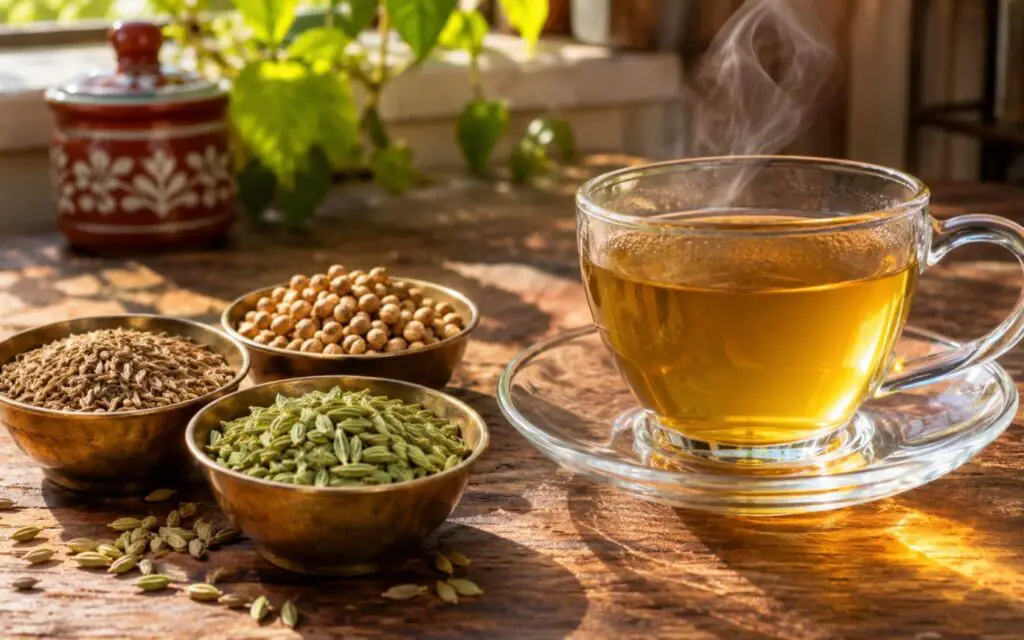
CCF tea is a simple Ayurvedic drink made from cumin (jeera), coriander (dhaniya) and fennel (saunf) seeds. Ayurveda uses it to support digestion, ease gas and calm cramping without adding heat, which is why it is often given even to people prone to acidity. To make it, boil ½ teaspoon of each seed in 2 cups of water until about 1 cup is left, strain, and sip it warm after meals.
Antacids like ENO work differently: they neutralise stomach acid within minutes and are useful for occasional heartburn or indigestion, but they do not fix the reason food sits and ferments. The evidence is honest but limited: fennel, cumin and coriander each have small studies for bloating and IBS symptoms, mostly using oils or extracts. There is no clinical trial on the combined home tea. It is a gentle, low-risk habit, not a cure. If bloating keeps coming back or comes with pain, weight loss, blood in stool or vomiting, see a doctor.
Medically reviewed by: Dr. Arun Jharwal, BAMS, MD (Ayurveda)
CCF Tea at a Glance
| Point | Detail |
|---|---|
| What it is | A decoction of cumin, coriander and fennel seeds |
| Hindi names | Jeera, dhaniya, saunf |
| Main traditional use | Gas, bloating, heaviness after meals, mild cramping |
| Ayurvedic action | Supports agni (digestive fire), balances Vata, does not aggravate Pitta |
| Recipe | ½ tsp each seed + 2 cups water, boil down to 1 cup, strain |
| When to drink | Warm, in sips, after lunch or dinner |
| How often | 1–2 cups a day is a common home routine |
| Strength of evidence | Small studies on fennel, cumin and coriander products; no trial on the combined tea |
| Generally suitable for | Most healthy adults, including many people with acidity |
| Be careful if | Pregnant or breastfeeding, giving it to young children, on diabetes medicines, allergic to carrot-family plants |
| See a doctor if | Bloating is regular, or comes with pain, weight loss, blood in stool, vomiting or fever |
Why Do Gas and Bloating Happen?

Bloating is the feeling of a tight, full or swollen belly. Gas is a normal by-product of digestion, but it becomes uncomfortable when there is too much of it, or when the gut is sensitive to normal amounts. Common everyday causes include:
- Food that is not broken down well. When carbohydrates reach the large intestine undigested, gut bacteria ferment them and produce gas. Beans, rajma, chole, onions, cabbage, wheat and some fruits are common triggers.
- Eating fast or swallowing air. Talking while eating, gulping water, chewing gum and fizzy drinks all add swallowed air.
- Heavy, oily or late meals. These slow the emptying of the stomach and leave you feeling heavy.
- Constipation. Stool that moves slowly gives bacteria more time to ferment and makes the belly feel full.
- Sensitive gut (IBS). In irritable bowel syndrome, the gut reacts strongly to normal amounts of gas.
- Food intolerances. Lactose intolerance is common in India and causes gas after milk.
The point the script makes is fair: in most everyday bloating, the problem is not too much acid. It is food that is not digested well and then ferments. That is why a digestion-supporting habit can make more sense than repeatedly neutralising acid.
ENO and Antacids vs CCF Tea: What Is the Difference?
ENO and similar fruit salts are antacids. Per the UK product leaflet, one 5 g dose contains sodium bicarbonate (2.32 g), citric acid (2.18 g) and sodium carbonate (0.50 g). When mixed with water they fizz, and the alkaline part neutralises stomach acid. That is why relief from heartburn or acid indigestion can come within minutes.
A few things are worth knowing:
- Antacids treat acid, not fermentation. If your bloating comes from food fermenting lower down in the gut, neutralising stomach acid does not address it.
- The fizz is itself gas. The reaction releases carbon dioxide, which is one reason people burp after taking it. The burp can feel like relief, but it is not the same as better digestion.
- They carry a lot of sodium. The UK leaflet lists about 0.85 g of sodium per 5 g dose and warns people on a salt-restricted diet, such as those with high blood pressure or heart failure, not to use it unless a doctor advises.
- They are meant for short-term use. The leaflet sets a maximum of two doses a day, at least 2 hours apart, for no more than 14 days, because excess use can cause alkalosis.
In Ayurveda, digestion is described as a fire (agni). Repeatedly putting the fire out with antacids, without correcting diet and eating habits, is seen as weakening agni over time. This is a traditional Ayurvedic view rather than something proven in clinical studies. Antacids are not dangerous when used occasionally and as directed. The more useful point is that regular bloating needs a look at the cause, not a daily sachet.
| ENO / antacids | CCF tea | |
|---|---|---|
| How it works | Neutralises stomach acid | Traditionally supports digestion and calms gut cramping |
| Speed | Minutes | Gentle, works best as a regular after-meal habit |
| Best for | Occasional heartburn or acid indigestion | Gas, heaviness and bloating after meals |
| Main caution | High sodium; short-term use only | Pregnancy, young children, diabetes medicines, seed allergy |
| Evidence | Well established for acid neutralisation | Small studies on the individual seeds; none on the combined tea |
What Does the Research Say?
Each of the three seeds has been studied on its own, usually as an essential oil or extract, not as a home tea. The results are encouraging but early.
Fennel (saunf)
Fennel is the best studied of the three. In a randomised, placebo-controlled trial of 121 people with mild-to-moderate irritable bowel syndrome, capsules combining curcumin and fennel essential oil for 30 days reduced symptom scores by about 50%, compared with about 26% on placebo. About 26% of people on the combination became symptom-free, against about 7% on placebo (Portincasa et al., 2016). Fennel was combined with curcumin, so the result cannot be credited to fennel alone. In an older trial, a fennel seed oil emulsion reduced colic in infants more than placebo (Alexandrovich et al., 2003), but this used a measured preparation under supervision and is not a reason to give fennel to babies at home.
In lab and animal work, fennel’s main compound, anethole, relaxes smooth muscle in the gut, which fits its traditional use for cramping and gas.
Cumin (jeera)
In an Iranian pilot study, 57 adults with IBS took 20 drops of cumin essential oil daily for four weeks. Bloating, abdominal pain and other symptoms fell significantly during and after treatment (Agah et al., 2013). This was a case series with no placebo group, so it shows promise but not proof.
Coriander (dhaniya)
Coriander has been tested as part of a herbal combination called Carmint, which contains lemon balm, spearmint and coriander. In a small randomised, double-blind trial of 32 IBS patients, Carmint reduced the severity and frequency of abdominal pain and bloating compared with placebo over 8 weeks (Vejdani et al., 2006). Again, coriander was one of three herbs.
Evidence Summary
| Seed | Type of study | What it found | Strength |
|---|---|---|---|
| Fennel | Randomised trial, 121 IBS patients (with curcumin) | About 50% vs 26% fall in symptom score | Moderate, but combined product |
| Fennel | Randomised trial, infants with colic (seed oil emulsion) | Less colic than placebo | Small, older study |
| Cumin | Case series, 57 IBS patients (essential oil) | Less bloating and pain | Weak, no control group |
| Coriander | Randomised pilot trial, 32 IBS patients (in Carmint) | Less pain and bloating | Small, combined product |
| CCF tea (all three) | No clinical trial | Traditional use only | Traditional |
Bottom line: the individual seeds have reasonable early support for gas, bloating and cramping. The combined CCF tea is a traditional Ayurvedic preparation and has not been tested as a tea in a clinical trial. It is fair to call it a gentle, well-tolerated home remedy, not “the best” or a proven treatment.
The Ayurvedic View of CCF Tea
In Ayurveda, good health depends on strong and balanced agni. When agni is weak or irregular, food is not digested completely and forms ama, a heavy, sticky residue linked with gas, bloating and sluggishness. Gas and bloating are mostly seen as a Vata imbalance, while burning and acidity point to Pitta.
The three seeds are combined because they balance each other:
- Cumin (jeeraka) is deepana and pachana: it kindles agni and helps digest ama. It is mildly warming.
- Coriander (dhanyaka) is cooling and gently digestive. It helps settle Pitta and is traditionally used for burning and thirst.
- Fennel (mishreya or shatapushpa) is sweet, cooling and carminative. It eases Vata, gas and cramping.
Together they support digestion without adding excess heat. That is why CCF tea is described as tridoshic, suitable for most body types, and why it is often given to people with acidity, who may not tolerate stronger warming spices like ginger or black pepper.
How to Make CCF Tea (Step-by-Step Recipe)
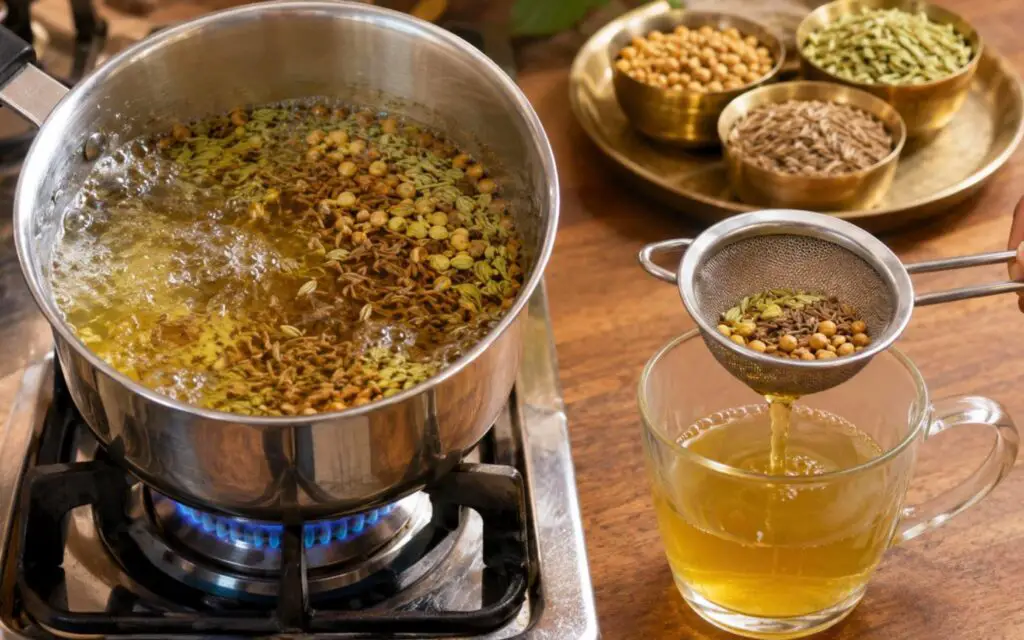
Makes: 1 cup (about 200 ml) | Time: 10–12 minutes
Ingredients
- ½ teaspoon cumin seeds (jeera)
- ½ teaspoon coriander seeds (sabut dhaniya)
- ½ teaspoon fennel seeds (saunf)
- 2 cups (about 400 ml) water
Method
- Lightly crush the seeds in a mortar and pestle (optional, but it releases more flavour).
- Add the seeds to 2 cups of water in a small pan.
- Bring to a boil, then simmer on low heat until about 1 cup is left. This usually takes 8–10 minutes.
- Strain into a cup.
- Let it cool until it is comfortably warm, and sip it slowly.
Quick version: Pour 1 cup of just-boiled water over the lightly crushed seeds, cover, and let it steep for 10 minutes. It is milder than the decoction but handy at work.
Batch version: For a day’s supply, use 1½ teaspoons of each seed in 6 cups of water, boil down to about 3 cups, and keep it in a flask. Make it fresh every day.
How and When to Drink It
- After meals: Sip a cup warm 15–30 minutes after lunch or dinner, when heaviness and gas are most common.
- In sips, not gulps: Gulping adds swallowed air, which works against the purpose.
- Plain is best: Avoid adding sugar. A few drops of lemon or a small piece of fresh ginger can be added if you do not have acidity.
- Give it time: A single cup can feel soothing, but the traditional idea is a regular habit over a few weeks, along with better eating habits.
Simple Variations
| If you have | Try this |
|---|---|
| Acidity or burning | Keep the basic recipe; add a little more fennel and coriander, and skip ginger |
| Heavy gas after dal or rajma | Add a pinch of ajwain (carom seeds) |
| Sluggish digestion, no acidity | Add a thin slice of fresh ginger |
| Summer heat | Let it cool to room temperature; do not add ice |
Habits That Help as Much as the Tea
- Eat slowly and chew well. Do not talk much while eating.
- Keep dinner lighter and at least 2–3 hours before bed.
- Soak and cook dals and beans well, and add hing and jeera to the tadka.
- Cut down on fizzy drinks, chewing gum and eating in a hurry.
- Take a 10–15 minute easy walk after meals.
- If milk gives you gas, try curd or lactose-free milk and see if it helps.
Side Effects and Who Should Be Careful
In the amounts used in cooking and in a cup or two of tea, cumin, coriander and fennel are very safe for most adults. Still, keep these points in mind:
- Pregnancy and breastfeeding: Seeds used in food are fine. Avoid concentrated fennel products and essential oils, and ask your doctor before drinking CCF tea daily. The European Medicines Agency’s herbal committee advises against using fennel as a herbal medicine in pregnancy and breastfeeding without medical advice, mainly because of its natural compound estragole.
- Babies and young children: Do not give fennel or CCF tea to infants or young children as a medicine without a paediatrician’s advice. A crying, gassy baby needs a proper check.
- Diabetes: Cumin may lower blood sugar slightly. If you take diabetes medicines, check your sugar levels when you start, and tell your doctor.
- Allergy: All three seeds belong to the carrot family (Apiaceae). People allergic to celery, carrot, mugwort or birch pollen can rarely react to them.
- Hormone-sensitive conditions: Fennel has mild estrogen-like compounds. If you have a hormone-sensitive condition, use only food amounts unless your doctor agrees.
- Medicines: If you take regular medicines, take the tea at least an hour apart, and mention it to your doctor.
When to See a Doctor
Home remedies are for occasional, everyday bloating. Following NHS advice, see a doctor if:
- You feel bloated regularly, or the bloating does not go away even after changing your diet.
- Bloating comes with weight loss you did not try for, or blood in your stool.
- You have bloating with vomiting, diarrhoea, constipation, stomach pain, fever or a lump in the tummy.
- You cannot pass stool or gas.
Go to an emergency department straight away if you have sudden severe stomach pain, vomit blood or something that looks like coffee grounds, or have severe difficulty breathing.
Women, especially over 50, should not ignore bloating that is new and persistent and happens on most days, as it can occasionally be an early sign of ovarian cancer. Anyone over 50 with new, lasting changes in digestion should get checked.
Myths vs Facts
| Myth | Fact |
|---|---|
| Gas and bloating always mean too much acid | Most everyday bloating comes from food fermenting in the gut, swallowed air, constipation or a sensitive gut, not excess acid |
| ENO fixes gas | ENO neutralises acid. Its fizz releases carbon dioxide, so the burp you get is partly from the drink itself |
| Antacids are harmless to take every day | Fruit salts are high in sodium and meant for short-term use. Daily need for them is a reason to see a doctor |
| CCF tea is scientifically proven to cure bloating | The individual seeds have small, early studies. The combined tea is traditional and has not been tested in a clinical trial |
| Home remedies are always safe for babies | Do not give fennel or herbal teas to infants or young children as medicine without a paediatrician’s advice |
| If the tea doesn’t work, drink more of it | One to two cups a day is enough. Persistent bloating needs a medical check, not a stronger dose |
| People with acidity cannot take any spices | Coriander and fennel are cooling, and cumin is only mildly warming, so many people with acidity tolerate CCF tea well |
Frequently Asked Questions
What is CCF tea?
CCF tea is an Ayurvedic decoction of cumin, coriander and fennel seeds. It is traditionally used to support digestion and ease gas, bloating and heaviness after meals.
What does CCF stand for?
Cumin, coriander and fennel. In Hindi, these are jeera, dhaniya and saunf.
Is CCF tea good for gas and bloating?
It is a gentle, traditional remedy that many people find soothing. Fennel, cumin and coriander have each shown benefits for bloating in small studies, but the combined tea has not been tested in a clinical trial.
Is CCF tea better than ENO?
They do different jobs. ENO quickly neutralises stomach acid and suits occasional heartburn. CCF tea is a gentle digestive habit for gas and heaviness. For regular bloating, finding the cause matters more than either.
Can I take CCF tea if I have acidity?
Usually yes. Coriander and fennel are cooling, and cumin is only mildly warming. Keep it plain, skip ginger, and stop if it makes your burning worse.
When is the best time to drink CCF tea?
Warm, 15–30 minutes after lunch or dinner, sipped slowly.
How many cups of CCF tea can I drink in a day?
One to two cups a day is a common home routine for adults.
How long does CCF tea take to work?
Some people feel lighter after a cup. The traditional approach is to drink it regularly for a few weeks along with better eating habits.
Can I drink CCF tea on an empty stomach?
Many people drink it in the morning without trouble. If it causes discomfort, take it after meals instead.
Can I make CCF tea with powder instead of whole seeds?
Yes. Use a small pinch (about ¼ teaspoon) of each powder in a cup of hot water, steep for 5 minutes and strain. Whole seeds give a cleaner taste.
Can I store CCF tea?
Keep it in a flask for the same day. Make a fresh batch every day.
Can pregnant women drink CCF tea?
Seeds used in normal cooking are fine. Before drinking CCF tea every day in pregnancy or while breastfeeding, ask your doctor, and avoid concentrated fennel products and oils.
Can I give CCF tea to my baby for gas?
Do not give it to infants or young children as medicine without a paediatrician’s advice.
Is CCF tea safe for people with diabetes?
Generally yes, without sugar. Cumin may lower blood sugar slightly, so if you take diabetes medicines, monitor your sugar levels when you start.
Does CCF tea help with weight loss?
There is no good evidence that it causes weight loss. It may reduce bloating, which can make the belly feel flatter, but that is not fat loss.
Can CCF tea help IBS?
Small studies of fennel, cumin and coriander products found less bloating and pain in IBS. CCF tea may be a helpful addition, but IBS should be managed with a doctor.
What else can I add to CCF tea?
A pinch of ajwain for heavy gas, or a thin slice of fresh ginger if you do not have acidity.
Are gas tablets bad?
Occasional use of over-the-counter gas or antacid tablets is generally safe when taken as directed. Needing them often is a sign to see a doctor and find the cause.
When should I worry about bloating?
See a doctor if bloating is regular, does not settle with diet changes, or comes with weight loss, blood in stool, vomiting, pain, fever or a lump in the tummy.
Why is CCF tea called tridoshic?
In Ayurveda, it balances all three doshas: it supports agni (good for Kapha), eases gas (Vata), and stays cooling enough not to aggravate Pitta.
Scientific Research
- Portincasa P, Bonfrate L, Scribano ML, et al. Curcumin and fennel essential oil improve symptoms and quality of life in patients with irritable bowel syndrome. Journal of Gastrointestinal and Liver Diseases. 2016;25(2):151–157. Read the study
- Agah S, Taleb AM, Moeini R, Gorji N, Nikbakht H. Cumin extract for symptom control in patients with irritable bowel syndrome: a case series. Middle East Journal of Digestive Diseases. 2013;5(4):217–222. Read the study
- Vejdani R, Shalmani HR, Mir-Fattahi M, et al. The efficacy of an herbal medicine, Carmint, on the relief of abdominal pain and bloating in patients with irritable bowel syndrome: a pilot study. Digestive Diseases and Sciences. 2006;51(8):1501–1507. Read the study
- Alexandrovich I, Rakovitskaya O, Kolmo E, Sidorova T, Shushunov S. The effect of fennel (Foeniculum vulgare) seed oil emulsion in infantile colic: a randomized, placebo-controlled study. Alternative Therapies in Health and Medicine. 2003;9(4):58–61.
- European Medicines Agency, Committee on Herbal Medicinal Products. Assessment report on Foeniculum vulgare Miller. EMA
- ENO patient information leaflet (UK). Drugs.com
- NHS. Bloating. nhs.uk
Conclusion
Gas and bloating are usually less about too much acid and more about food that is not digested well, swallowed air or a sensitive gut. Antacids like ENO bring quick relief for occasional acid indigestion, but they are high in sodium, meant for short-term use, and do not address fermentation.
CCF tea, made from cumin, coriander and fennel, is a gentle Ayurvedic option that supports digestion without adding heat. Each seed has some early research behind it, though the combined tea remains a traditional remedy. Make it simply, sip it warm after meals, pair it with slower and lighter eating, and see a doctor if bloating keeps coming back or comes with warning signs.
Medical Disclaimer
This article is for educational purposes only and is not a substitute for professional medical advice, diagnosis or treatment. Do not stop or change any prescribed medicine on your own. If you are pregnant, breastfeeding, giving remedies to a child, managing diabetes or another health condition, or if your symptoms persist or worsen, consult a qualified doctor or Ayurvedic physician.
Medically reviewed by: Dr. Arun Jharwal, BAMS, MD (Ayurveda)