
Vitamin D and Magnesium: Why Your Vitamin D Is Not Going Up
If you take vitamin D but your report stays low, one hidden reason can be low magnesium. Vitamin D from sunlight or tablets is inactive. Your liver converts it to 25-hydroxyvitamin D (the form your blood test measures), and your kidneys then convert that to the active hormone. The enzymes for both steps depend on magnesium. In a 2018 randomised trial, magnesium supplements raised vitamin D levels in people who were low and lowered them in people who were high, suggesting magnesium helps the body keep vitamin D in a healthy range.
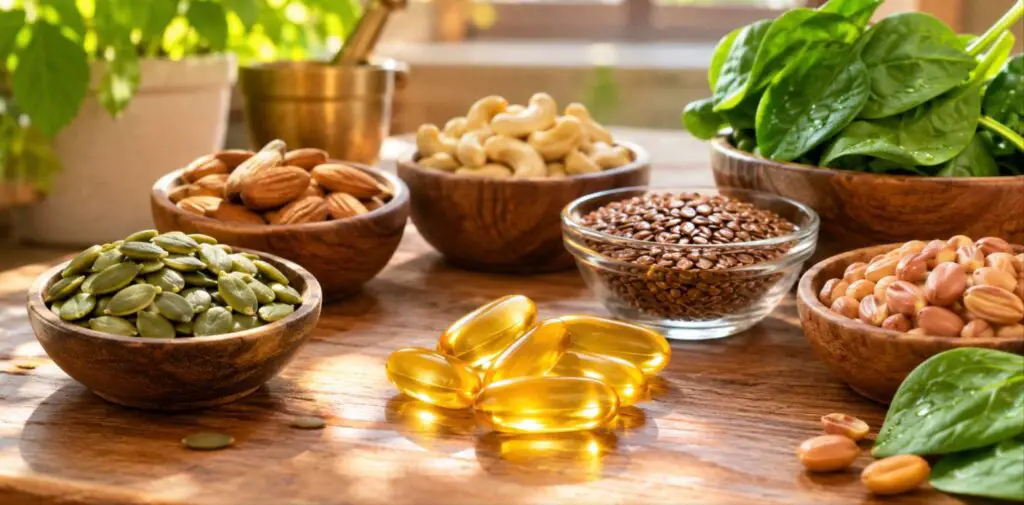
- Magnesium-rich foods: pumpkin seeds, almonds, cashews, flaxseeds, sesame, peanuts, rajma, kala chana, ragi and leafy greens.
- Magnesium is not the only reason: a low dose, skipped doses, taking D3 without fat, obesity, gut problems, some medicines and testing too early can all keep levels low.
- Retest after about 3 months, not 3 weeks.
- Supplements: ask your doctor first, especially if you have kidney disease, where magnesium can build up to unsafe levels.
Medically reviewed by: Dr. Arun Jharwal, BAMS, MD (Ayurveda)
Vitamin D and Magnesium at a Glance
| Feature | Vitamin D | Magnesium |
|---|---|---|
| Main sources | Sunlight on skin, fortified foods, supplements | Seeds, nuts, pulses, whole grains, leafy greens |
| Main jobs | Calcium absorption, bones, muscles, immunity | 300+ enzyme reactions, muscles, nerves, energy, bones |
| Blood test | 25(OH)D | Serum magnesium (often normal even when body stores are low) |
| Daily need (adults) | 600–800 IU (higher if deficient, as prescribed) | About 400–420 mg for men, 310–320 mg for women |
| How they connect | Needs magnesium to be converted to active forms | Absorption from food is improved by active vitamin D |
How Vitamin D Becomes Active
Vitamin D3 from sunlight or a tablet cannot do anything until the body activates it in two steps:
- Liver: an enzyme (25-hydroxylase) converts vitamin D3 into 25-hydroxyvitamin D, also called calcidiol. This is the storage form, and it is what your vitamin D blood test measures.
- Kidneys: another enzyme (1-alpha-hydroxylase) converts calcidiol into 1,25-dihydroxyvitamin D, also called calcitriol. This is the active hormone that helps you absorb calcium.
The enzymes for both steps need magnesium as a helper (cofactor). The protein that carries vitamin D in the blood also works better with enough magnesium. So when magnesium is low, the conversion can slow down, and your report may not rise as much as expected.
What the research says
- Uwitonze and Razzaque, 2018 (Journal of the American Osteopathic Association): this review explains that the key vitamin D enzymes depend on magnesium and estimates that a large share of people do not get enough magnesium from their diet. The authors warn that taking vitamin D without enough magnesium may leave much of it stored and inactive.
- Dai et al., 2018 (American Journal of Clinical Nutrition): in a randomised trial of 250 adults, magnesium supplements matched to each person’s diet raised vitamin D levels in those who were low and lowered them in those who were high. The authors concluded that magnesium helps optimise vitamin D status.
Evidence summary
| Claim | Strength of evidence |
|---|---|
| Vitamin D enzymes need magnesium | Strong: established biochemistry |
| Magnesium supplements improve low vitamin D levels | Moderate: one well-designed randomised trial, plus observational studies |
| High-dose vitamin D can lower magnesium and cause cramps | Limited: a proposed mechanism with little direct trial evidence |
| Magnesium alone fixes vitamin D deficiency | Not supported: most deficient people still need vitamin D itself |
Other Reasons Your Vitamin D Is Not Going Up
Magnesium is one possible reason, but check these too:
| Reason | What to do |
|---|---|
| Dose too low for your level | Follow the dose your doctor prescribes for your report |
| Skipped or irregular doses | Set a reminder; weekly sachets are easy to miss |
| Taken on an empty stomach | Take D3 with a meal that has some fat, such as milk, ghee or nuts |
| Tested too early | Retest after about 3 months of regular dosing |
| Higher body weight | Vitamin D is stored in fat tissue, so more may be needed |
| Gut problems | Celiac disease, IBD, gastric surgery and pancreatic problems reduce absorption |
| Liver or kidney disease | Both conversion steps can be affected |
| Some medicines | Anti-epileptics, steroids and some HIV and TB drugs speed up vitamin D breakdown |
| Little sun exposure | Covered skin, indoor jobs, pollution and darker skin all reduce production |
| Poor-quality product | Choose a trusted brand with a clear IU dose |
Signs You May Be Low in Magnesium
Mild magnesium deficiency is common and easy to miss, because blood tests often look normal even when body stores are low. Possible signs include:
- Muscle cramps, twitching or eyelid flutter
- Tiredness and weakness
- Poor sleep or restlessness
- Headaches
- Constipation
- Irregular heartbeat or palpitations (needs a doctor)
You are at higher risk if you eat mostly refined foods, drink alcohol regularly, have diabetes, take acid-reducing medicines (PPIs) or diuretics for a long time, or have long-term diarrhoea.
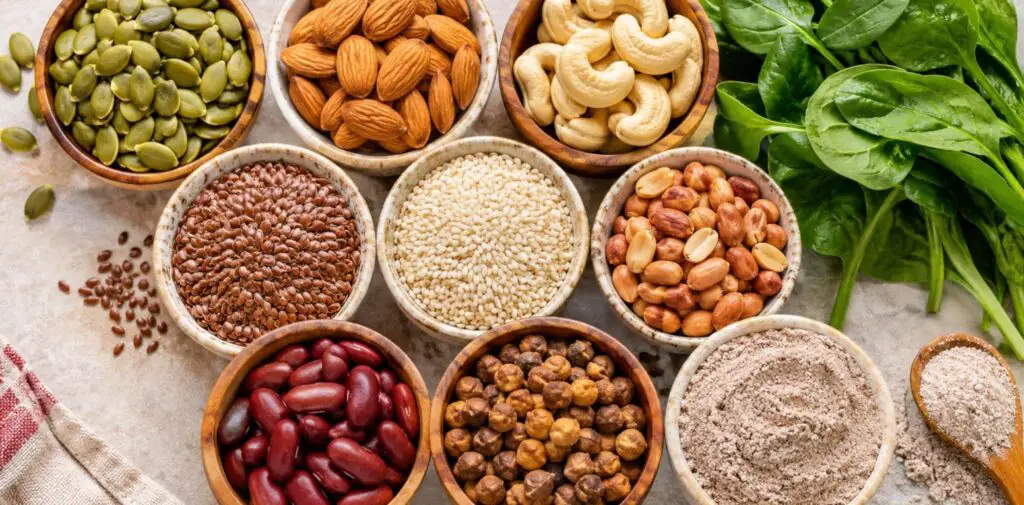
7 Magnesium-Rich Indian Foods
| Food | Approx. magnesium | Easy way to eat |
|---|---|---|
| Pumpkin seeds | About 550 mg per 100 g (about 150 mg in a 30 g handful) | Roasted as a snack, on salads |
| Almonds and cashews | About 270–290 mg per 100 g | A small handful a day |
| Flaxseeds and til (sesame) | About 350–390 mg per 100 g | 1 tablespoon in roti dough, chutney or laddoo |
| Peanuts | About 170 mg per 100 g | Roasted, in poha or chikki |
| Rajma and kala chana | Roughly 100–140 mg per 100 g (dry) | Curry, sprouts or chaat |
| Ragi and oats | Roughly 130–170 mg per 100 g | Ragi roti, porridge or dosa |
| Spinach and other leafy greens | About 80 mg per 100 g | Palak dal, saag or sabzi |
Bananas are often listed as a magnesium food, but they are a modest source (about 30 mg per banana). They are fine to include, but seeds, nuts and pulses do far more.
Values are approximate and vary with variety and cooking. A day that includes a handful of seeds or nuts, a bowl of dal or chana, and a millet or whole grain can meet most of your magnesium needs.
Should You Take a Magnesium Supplement?
Food comes first. A supplement may help if your diet is poor, if your doctor suspects deficiency, or if your vitamin D is not rising despite regular dosing.
- Forms: magnesium glycinate and citrate are better absorbed and gentler on the stomach. Magnesium oxide is cheap but poorly absorbed and more likely to cause loose stools.
- Dose: for adults, supplements should not exceed 350 mg of magnesium a day unless a doctor advises it. This limit does not include magnesium from food.
- Timing: many people take it in the evening, as it may help muscle relaxation and sleep.
- Side effects: loose stools, nausea and stomach cramps, especially with higher doses.
Who should not take magnesium supplements without a doctor
- Kidney disease: the kidneys clear magnesium, so it can build up to dangerous levels.
- Heart rhythm problems or heart block
- People taking certain medicines: some antibiotics (tetracyclines, quinolones), osteoporosis drugs (bisphosphonates) and thyroid tablets should be taken a few hours apart from magnesium.
Taking Vitamin D the Right Way
- Get tested first. Vitamin D (25-OH) below 20 ng/mL is usually called deficient, and 20–29 ng/mL insufficient.
- Take the dose your doctor prescribes, whether daily or weekly, and do not skip doses.
- Take it with a meal that has some fat, since vitamin D is fat-soluble.
- Eat magnesium-rich foods every day, and ask your doctor about magnesium if your level is not rising.
- Get safe sunlight: about 15–30 minutes on arms and face, a few times a week, depending on skin tone and season.
- Retest after about 3 months.
- Do not self-prescribe very high doses. Too much vitamin D can raise calcium to harmful levels and cause nausea, kidney stones and kidney damage.
The Ayurvedic View: Sunlight and Strong Digestion

Classical Ayurveda does not describe vitamin D or magnesium by name, but two of its principles fit well:
- Atapa sevana (sun exposure): gentle morning sunlight is traditionally recommended, especially in winter, for strength and warmth, which matches the role of sunlight in making vitamin D.
- Agni (digestive fire): Ayurveda holds that nutrition depends not just on what you eat but on how well you digest and absorb it. Weak digestion, irregular meals and a diet of refined foods reduce nourishment, much as modern science sees poor absorption and low magnesium intake hold back vitamin D.
A whole-food diet rich in seeds, nuts, pulses and millets, regular meals, and daily sunlight support both views.
Myths vs Facts
| Myth | Fact |
|---|---|
| If vitamin D is not rising, the brand must be fake. | Dose, missed doses, absorption, body weight, medicines and magnesium status all matter. |
| The vitamin D test measures the active hormone. | It measures 25(OH)D, the storage form made in the liver, which is the best marker of your status. |
| Magnesium alone will fix vitamin D deficiency. | Most people with a deficiency still need vitamin D itself; magnesium helps it work. |
| Bananas are the best magnesium source. | Pumpkin seeds, nuts, flax, sesame and pulses have far more. |
| More vitamin D is always better. | Very high doses can cause high calcium and kidney damage. |
| Everyone should take a magnesium supplement with D3. | Many people can meet their needs through food; supplements need care in kidney disease. |
Frequently Asked Questions (FAQs)
Why is my vitamin D not increasing even after taking supplements?
Common reasons include a dose too low for your level, missed doses, taking it without food, testing too early, higher body weight, gut or liver problems, some medicines and low magnesium.
Does vitamin D need magnesium to work?
Yes. The liver and kidney enzymes that convert vitamin D into its storage and active forms depend on magnesium.
Should I take magnesium with vitamin D3?
Many people can get enough magnesium from food. If your diet is poor or your vitamin D is not rising, ask your doctor whether a magnesium supplement makes sense for you.
Which magnesium is best to take with vitamin D?
Magnesium glycinate or citrate is usually better absorbed and gentler on the stomach than magnesium oxide.
Can I take vitamin D and magnesium together?
Yes, they can be taken at the same time. Many people take vitamin D with breakfast or lunch and magnesium in the evening.
Does high-dose vitamin D deplete magnesium?
It has been proposed, because converting vitamin D uses magnesium, but direct evidence is limited. If you get cramps or restlessness on high-dose vitamin D, tell your doctor.
What are the symptoms of low magnesium?
Muscle cramps, twitching, tiredness, poor sleep, headaches, constipation and, in more severe cases, an irregular heartbeat.
Can a blood test show low magnesium?
A serum magnesium test can show significant deficiency, but it often looks normal even when body stores are low, because only about 1% of the body’s magnesium is in the blood.
How long does it take for vitamin D levels to rise?
Usually 8–12 weeks of regular dosing. Retest after about 3 months.
What is the best time to take vitamin D?
With a meal that contains some fat, usually breakfast or lunch.
Can I get enough vitamin D from sunlight in India?
It is possible, but many Indians are still deficient because of indoor lifestyles, covered skin, pollution and darker skin, which needs more sun to make the same amount.
Which Indian foods are richest in magnesium?
Pumpkin seeds, flaxseeds, til, almonds, cashews, peanuts, rajma, kala chana, ragi, oats and leafy greens.
Are bananas high in magnesium?
Not very. One banana has about 30 mg. Seeds, nuts and pulses are much richer.
Is it safe to take magnesium every day?
From food, yes. Supplements up to 350 mg a day are generally safe for healthy adults, but people with kidney disease must ask a doctor first.
Can magnesium cause diarrhoea?
Yes, especially magnesium oxide or high doses. Lower the dose or switch to glycinate.
Can too much vitamin D be harmful?
Yes. Very high doses taken for a long time can raise blood calcium and damage the kidneys. Take only the dose your doctor prescribes.
Do I also need vitamin K2 with vitamin D?
Vitamin K2 helps direct calcium to bones, and some doctors pair it with vitamin D, but evidence for routine use is still developing. Ask your doctor.
Should I stop vitamin D if my magnesium is low?
No. Do not stop prescribed vitamin D on your own; ask your doctor about correcting magnesium alongside it.
Scientific Research
- Magnesium and vitamin D activation: Uwitonze AM, Razzaque MS. Role of magnesium in vitamin D activation and function. Journal of the American Osteopathic Association, 2018; 118(3): 181–189. Read
- Randomised trial: Dai Q, Zhu X, Manson JE, et al. Magnesium status and supplementation influence vitamin D status and metabolism: results from a randomized trial. American Journal of Clinical Nutrition, 2018; 108(6): 1249–1258. PMC
- Magnesium needs and supplement limits: National Institutes of Health, Office of Dietary Supplements. Magnesium: Fact Sheet for Health Professionals.
Conclusion
If your vitamin D report refuses to budge, do not just keep raising the dose. Vitamin D has to be switched on by your liver and kidneys, and both steps rely on magnesium. A diet low in seeds, nuts, pulses and whole grains can quietly hold vitamin D back, and a well-designed trial showed that magnesium helps bring vitamin D into a healthy range.
Magnesium is one piece of the puzzle, not the whole answer. Take the vitamin D dose you are prescribed, with food, every time; eat magnesium-rich foods daily; get some safe sunlight; retest after about 3 months; and speak to your doctor before starting a magnesium supplement, especially if you have kidney disease.
Medical Disclaimer
This article is for educational purposes only and is not a substitute for professional medical advice. Do not start, stop or change vitamin D or magnesium supplements without consulting your doctor, especially if you have kidney disease, heart problems or take regular medicines.
Medically reviewed by: Dr. Arun Jharwal, BAMS, MD (Ayurveda)