
Walking After Meals: How a 10-Minute Walk (Shatapavali) Lowers Blood Sugar
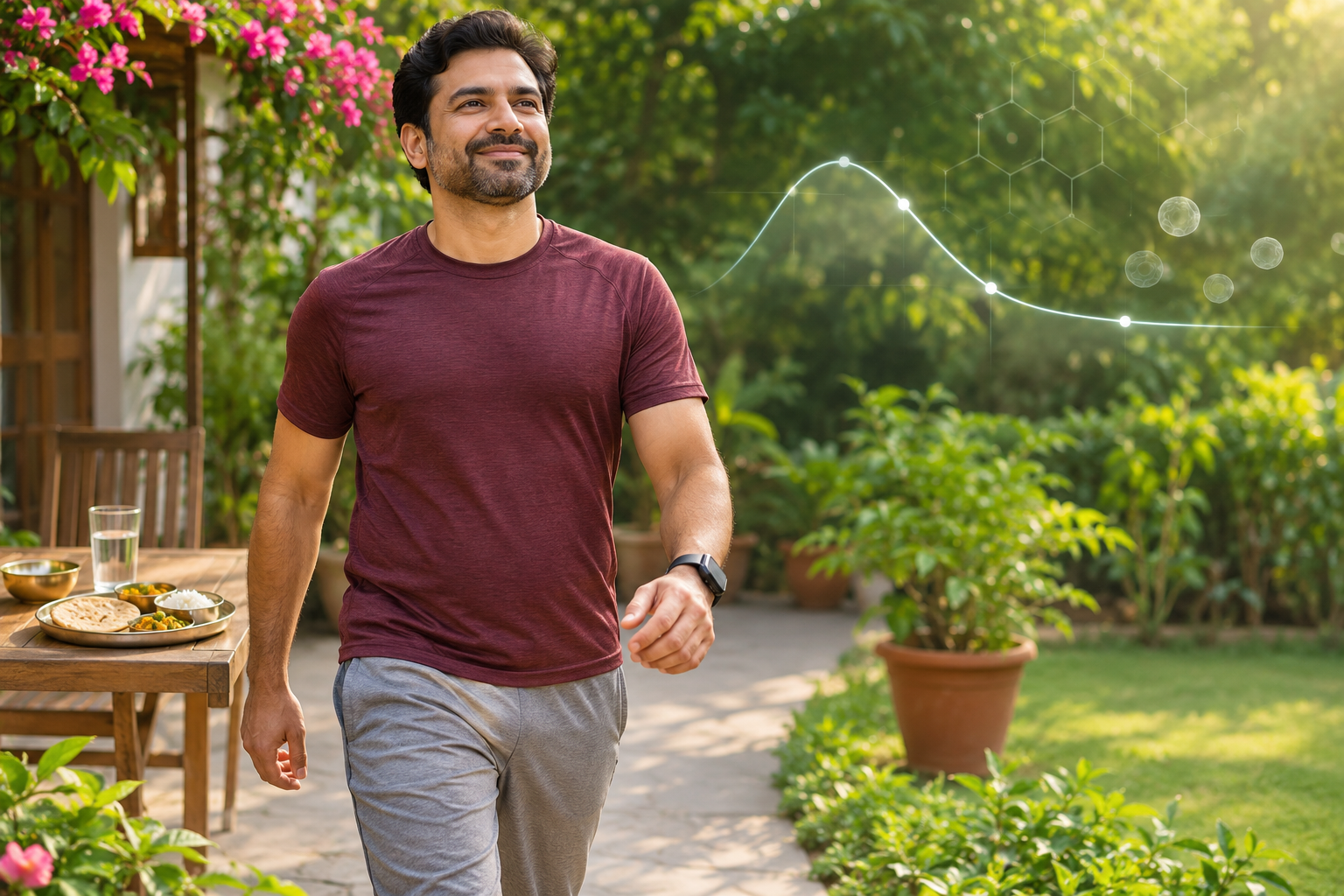
A short, easy Walking After Meals is one of the simplest ways to blunt the blood sugar spike that follows eating. Blood sugar usually peaks about 30–60 minutes after a meal. If your leg muscles are moving during that window, they pull glucose out of the blood and burn it as fuel. Studies show that even 2–5 minutes of light walking after eating lowers the sugar and insulin rise compared with sitting, and 10-minute walks after each meal lowered post-meal sugar by about 12% in people with type 2 diabetes, with the biggest effect (22%) after dinner. Ayurveda has long advised the same habit, called Shatapavali: about 100 slow steps after a meal.
- When: start within 5–30 minutes of finishing your meal.
- How long: 10–15 minutes is ideal; even 2–5 minutes helps.
- How fast: an easy, relaxed stroll. No running.
- Most important meal: dinner, because people are least active after it.
- Be realistic about belly fat: post-meal walks improve blood sugar, but fat loss depends on your overall diet and activity. A 10-minute walk burns only about 30–50 kcal.
Medically reviewed by: Dr. Arun Jharwal, BAMS, MD (Ayurveda)
Post-Meal Walk at a Glance
| Feature | Details |
|---|---|
| What it is | Light walking soon after eating |
| Ayurvedic name | Shatapavali (“100 steps”) |
| Best start time | Within 5–30 minutes of finishing a meal |
| Duration | 10–15 minutes ideal; 2–5 minutes still helps |
| Pace | Easy enough to talk comfortably |
| Main benefit | Smaller blood sugar and insulin spike after meals |
| Best meal to walk after | Dinner, then lunch |
| Who benefits most | People with prediabetes, type 2 diabetes, PCOS, insulin resistance, or a sedentary job |
| Cost | Free |
What Happens to Blood Sugar After You Eat
When you eat carbohydrates, such as roti, rice, bread or sweets, they are broken down into glucose and absorbed into the blood. In most people, blood sugar rises and peaks about 30–60 minutes after a meal, then returns to baseline over 2–3 hours.
To bring it down, the pancreas releases insulin. Insulin helps cells take up glucose, and it also signals the body to store extra energy, first as glycogen in the liver and muscles and then as fat.
Why big spikes matter
- Repeated large spikes and high insulin levels are linked to insulin resistance, prediabetes and type 2 diabetes.
- Large swings in sugar can leave you sleepy, hungry or craving sweets a couple of hours after eating.
- Over time, high post-meal sugar is linked to heart and blood vessel damage, even when fasting sugar looks normal.
Indians are especially prone to insulin resistance and belly fat at lower body weights, and a typical Indian meal is carbohydrate-heavy. That makes post-meal blood sugar a particularly useful target.
How a Walk Lowers the Spike
Your thigh, calf and buttock muscles are the largest glucose users in the body. When they contract, they move glucose transporters called GLUT4 to the muscle surface and pull sugar in from the blood. Crucially, this pathway works independently of insulin.
That means:
- Less glucose stays in the blood, so the peak is lower.
- The pancreas needs to release less insulin.
- The effect works even in people whose insulin response is weak, such as those with type 2 diabetes.
Timing matters. Walking 5 hours before or long after a meal does not catch this peak. Walking soon after eating meets the incoming glucose head-on.
What the Research Says
- Reynolds et al., 2016 (Diabetologia): 41 adults with type 2 diabetes walked either 10 minutes after each main meal or 30 minutes once a day for 2 weeks. Total walking time was the same, but post-meal walking lowered post-meal blood sugar by about 12% overall and by 22% after dinner.
- Buffey et al., 2022 (Sports Medicine): a meta-analysis of 7 studies found that 2–5 minutes of light walking within 60–90 minutes of a meal lowered post-meal blood sugar and insulin compared with sitting. Standing helped blood sugar a little, but only walking lowered insulin.
- DiPietro et al., 2013 (Diabetes Care): in older adults at risk of diabetes, three 15-minute walks after meals controlled 24-hour blood sugar as well as one 45-minute walk, and were better at lowering the rise after dinner.
Evidence summary
| Claim | Strength of evidence |
|---|---|
| Post-meal walking lowers the blood sugar spike | Strong: randomised crossover trials and a meta-analysis |
| Even 2–5 minutes helps | Moderate: meta-analysis of small studies |
| Walking after dinner gives the biggest benefit | Moderate: several trials |
| It directly burns belly fat | Weak: fat loss depends on overall calorie balance and long-term activity |
Does It Help With Belly Fat?
Partly, and indirectly. A 10-minute easy walk burns only about 30–50 kcal, so it will not melt fat on its own. But it helps in other ways:
- Lower insulin spikes mean less signalling to store energy and, over time, better insulin sensitivity, which is closely tied to belly fat.
- Three short walks a day add 30 minutes of activity, about 3,000–4,000 extra steps.
- Many people find fewer cravings and less post-meal sleepiness.
For real fat loss, combine post-meal walks with a sensible diet, enough protein, strength training and good sleep. Be wary of any “flat belly in 7 days” promise.
The Ayurvedic View: Shatapavali
A well-known Ayurvedic saying advises: after eating, walk a hundred steps (shatapada). This habit is called Shatapavali, from shata (hundred) and pavali (steps).
Ayurveda’s approach to the time after a meal is about gentle movement, not exertion:
- Sit calmly for a few minutes after eating, then walk slowly for about 100 steps.
- Avoid heavy exercise, running, swimming or bathing right after food, because they pull energy away from digestion.
- Do not sleep or lie down immediately after eating, especially after lunch; daytime sleep after meals is said to increase Kapha and heaviness.
- Vajrasana (sitting on the heels) for 5–10 minutes after meals is another traditional practice for digestion.
In Ayurvedic terms, light walking after a meal supports Agni (digestive fire), prevents heaviness and lethargy from aggravated Kapha, and helps food settle. This lines up neatly with the modern finding that gentle muscle activity clears glucose from the blood.
How to Walk After Meals: The Right Way
- Finish your meal and start within 5–30 minutes. If you need to, sit for 5 minutes first.
- Walk at an easy pace where you can talk comfortably. A fast walk is fine if it feels comfortable, but no running.
- Aim for 10–15 minutes, or 1,000–1,500 steps. On busy days, even 2–5 minutes counts.
- Prioritise dinner, then lunch. If you can do only one walk, do it after your largest meal.
- No space? Walk around the house, pace while on a phone call, climb a few stairs slowly, or do gentle marching in place.
Indoor options when you cannot go out
- Walk around your home or terrace
- Walk while talking on the phone
- March in place while watching TV
- Do easy calf raises or bodyweight squats for 2–3 minutes
7-Day Post-Meal Walking Plan
| Day | What to do |
|---|---|
| Day 1 | 5-minute walk after dinner |
| Day 2 | 10-minute walk after dinner |
| Day 3 | 10 minutes after dinner + 5 minutes after lunch |
| Day 4 | 10 minutes after dinner + 10 minutes after lunch |
| Day 5 | 10 minutes after each main meal |
| Day 6 | 10–15 minutes after each main meal; add 2 minutes of stairs if comfortable |
| Day 7 | 10–15 minutes after each meal; check how your energy, cravings and (if you test) sugar readings compare with Day 1 |
After the first week, keep going. The benefit lasts only as long as the habit does.
Who Should Be Careful
- People on insulin or sulfonylurea tablets: light walking is usually safe, but if you get shaky, sweaty or dizzy, check your sugar. Ask your doctor whether your dose timing needs adjusting.
- Acid reflux or hiatus hernia: walking upright is generally better than lying down, but keep the pace gentle and avoid bending.
- Heart disease, severe breathlessness, joint pain or recent surgery: ask your doctor how much walking is safe for you.
- Pregnancy: gentle walking after meals is usually encouraged, especially with gestational diabetes, but follow your doctor’s advice.
- Very heavy meals: keep the pace slow to avoid side cramps.
Myths vs Facts
| Myth | Fact |
|---|---|
| You must walk for 30–45 minutes to help blood sugar. | Even 2–5 minutes of light walking after a meal lowers the spike; 10–15 minutes is better. |
| Walking right after eating harms digestion. | Gentle walking is fine and traditional in Ayurveda. Only heavy exercise right after meals is a problem. |
| A morning walk is enough. | Morning walks are healthy, but they do not catch the post-meal sugar peak later in the day. |
| Post-meal walks will give a flat belly in 7 days. | They improve blood sugar; fat loss takes weeks to months of diet and activity. |
| Lying down after dinner helps digestion. | Lying down soon after eating can worsen acid reflux; a short walk is better. |
| Walking only matters for diabetics. | Anyone with a sedentary routine or high-carb meals benefits from smaller spikes. |
Frequently Asked Questions (FAQs)
How soon after eating should I walk?
Start within 5–30 minutes of finishing your meal, so you are moving during the 30–60 minute sugar peak.
How long should I walk after a meal?
10–15 minutes is ideal. Even 2–5 minutes of light walking lowers the spike compared with sitting.
Is it bad to walk immediately after eating?
A gentle walk is fine. Avoid fast running or heavy exercise right after a big meal, as it can cause cramps or discomfort.
How fast should I walk?
At an easy, comfortable pace where you can still talk. A brisker walk also works if it feels comfortable.
Which meal is the most important to walk after?
Dinner. Studies found the biggest benefit after the evening meal, when people are usually least active.
Does walking after meals help with diabetes?
Yes. In people with type 2 diabetes, 10-minute walks after each meal lowered post-meal blood sugar by about 12%, and by 22% after dinner. Keep taking your prescribed medicines.
Can walking after meals reduce belly fat?
It helps indirectly by improving blood sugar and insulin and adding daily activity, but fat loss also needs diet changes, strength training and sleep.
Is standing after meals helpful?
Standing is better than sitting for blood sugar, but light walking works better and also lowers insulin.
What is Shatapavali?
It is the Ayurvedic practice of walking about 100 slow steps after a meal to support digestion.
Is a morning walk better than a post-meal walk?
They do different jobs. Morning walks add fitness and activity; post-meal walks specifically lower the sugar spike. Doing both is best.
Can I walk on a treadmill after meals?
Yes, at a slow, comfortable speed.
Can I do Vajrasana instead of walking?
Vajrasana is a traditional aid to digestion, but walking uses large leg muscles that clear glucose more effectively. You can do both.
Should I walk after eating fruit or a snack?
It helps most after carbohydrate-heavy meals. A short walk after a sweet snack can also help.
Is walking after meals safe in pregnancy?
Gentle walking is usually encouraged, especially with gestational diabetes, but follow your doctor’s advice.
What if I have acid reflux?
A slow, upright walk is usually better than lying down after eating. Avoid bending or brisk exercise right after meals.
Can I lose weight just by walking after meals?
It helps, but on its own it burns little. It works best as part of a wider plan.
Do I need to walk 100 steps exactly?
No. 100 steps is the traditional minimum. More, up to 10–15 minutes, gives a bigger effect on blood sugar.
Is it okay to sleep right after dinner?
It is better to wait 2–3 hours after dinner before lying down, and to take a short walk first.
Scientific Research
- Post-meal walking in type 2 diabetes: Reynolds AN, Mann JI, Williams S, Venn BJ. Advice to walk after meals is more effective for lowering postprandial glycaemia in type 2 diabetes mellitus than advice that does not specify timing: a randomised crossover study. Diabetologia, 2016. Summary
- Short bouts of light walking: Buffey AJ, et al. The acute effects of interrupting prolonged sitting time in adults with standing and light-intensity walking on biomarkers of cardiometabolic health: a systematic review and meta-analysis. Sports Medicine, 2022. Summary
- Older adults: DiPietro L, et al. Three 15-min bouts of moderate postmeal walking significantly improves 24-h glycemic control in older people at risk for impaired glucose tolerance. Diabetes Care, 2013.
Conclusion
The best walk of your day might be the shortest one. Blood sugar peaks 30–60 minutes after you eat, and a gentle 10-minute walk during that window lets your leg muscles soak up glucose as fuel, lowering the spike and the insulin that follows. Research backs it, especially after dinner, and Ayurveda’s Shatapavali advised it centuries ago.
Start with a few minutes after dinner, build up to 10–15 minutes after each main meal, and keep it easy. Pair it with sensible eating and regular exercise for belly fat, and keep taking any diabetes medicines your doctor has prescribed.
Medical Disclaimer
This article is for educational purposes only and is not a substitute for professional medical advice. If you have diabetes, heart disease, joint problems or are pregnant, ask your doctor how much and when to walk, and do not change your medicines without medical advice.
Medically reviewed by: Dr. Arun Jharwal, BAMS, MD (Ayurveda)