
Blood Sugar Spikes After Eating: Causes, Signs
A blood sugar spike is a quick rise in blood glucose after eating, caused mostly by fast-digesting starch and sugar, such as white rice, maida, sweets and sugary drinks. You can soften a spike without giving up Indian food: eat smaller portions of starch, start your meal with vegetables, add dal or another protein, keep dinner lighter and earlier, and take a short walk after meals. This guide explains what a spike is, its causes and signs, which foods tend to spike, practical ways to soften spikes, breakfast ideas, and when to see a doctor.
A blood sugar spike isn’t about one “bad” food. It’s about how much starch you eat, what you eat with it, and when.
At Anantam Ayurveda, many patients ask why their sugar shoots up after an ordinary home-cooked meal. Below, we explain the reasons and the simple changes that make the biggest difference.
blood sugar spike | Updated October 2026 | 11 min read | Anantam Ayurveda Team, medically reviewed by Dr. Arun Jharwal, BAMS, MD (Ayurveda)
What Is a Blood Sugar Spike? The Short Answer
A blood sugar spike is a sharp rise in blood glucose, usually within one to two hours of eating, after a meal rich in quickly digested carbohydrates. Starchy foods like rice can raise blood sugar even without sweets, so total carbs and food quality both matter, as the NIDDK summary of the ADA Standards of Care in Diabetes 2025 highlights.
| What drives a spike | How to soften it |
|---|---|
| Large portions of starch | Keep rice or roti to about a quarter of the plate |
| Eating carbs first or alone | Eat vegetables and protein first |
| Refined grains and sugar | Choose whole grains, dal and vegetables |
| Late, heavy dinners | Eat a lighter, earlier dinner |
| Sitting after meals | Take a short walk |
Key Takeaway: Portion, food order and protein are the three easiest levers for softer spikes.
Blood Sugar Spike Meaning, in Simple Words
When you eat carbohydrates, your body breaks them down into glucose, which enters the blood. Insulin then helps move that glucose into your cells. If a lot of glucose arrives quickly, or if your body doesn’t use insulin well, as in type 2 diabetes, blood sugar rises sharply. That sharp rise is a spike.
- In one line: A spike is a fast, steep rise in blood sugar after a meal.
- In Hindi: Khana khane ke baad khoon mein sugar ka tezi se badh jaana “sugar spike” kehlata hai.
- Normal response: Everyone’s sugar rises somewhat after eating; in diabetes, the rise is often higher and lasts longer.
Why spikes matter over time
Occasional rises are normal. But eating a lot of refined starch over years is linked to higher diabetes risk; a 2012 BMJ meta-analysis found higher white rice intake was associated with higher type 2 diabetes risk in Asian populations. For people who already have diabetes, frequent high readings raise HbA1c, which is linked to complications.
Causes of Blood Sugar Spikes
Most spikes come from what, how much and when you eat. Common Indian meal patterns, such as a large plate of white rice with little dal, or chai with biscuits, can cause sharp rises.
- Refined starch: White rice, maida, white bread, bakery items and instant noodles digest quickly.
- Large portions: Two extra rotis or a second helping of rice add a lot of glucose.
- Eating carbs alone: Rice, poha or bread without protein or vegetables raises sugar faster.
- Late heavy dinners: Some studies show the same meal raises sugar more at night.
- Sugary drinks: Colas, packaged juices and sweetened chai raise sugar very fast.
- Other factors: Stress, poor sleep, illness and some medicines can also push readings up.
Why white rice spikes so easily
Most common Indian white rice varieties are high-GI and raise blood sugar quickly. A study of three Indian rice varieties found Sona Masuri, Ponni and Surti Kolam all had high glycaemic index values (72, 70 and 77).
Hidden spikes in everyday Indian habits
- Chai and biscuits: Sweet tea with biscuits or rusk, several times a day, adds sugar and refined flour.
- “Healthy” juices: Fresh fruit juice lacks fibre and raises sugar faster than whole fruit.
- Festive and wedding meals: Large portions of rice, puri, sweets and fried snacks in one sitting.
- Skipping breakfast: A long gap can lead to a very large lunch and a bigger spike.
Signs of a Blood Sugar Spike, and Why a Glucometer Is the Only Reliable Check
Many people feel nothing during a spike. Others notice tiredness, heaviness or sleepiness after a meal, or thirst. Because these feelings are vague and can have other causes, a glucometer reading is the only reliable way to know whether your sugar has spiked.
| Possible feeling | Could also be due to |
|---|---|
| Sleepiness or heaviness after meals | A large meal, poor sleep |
| Thirst or dry mouth | Heat, dehydration |
| Difficulty concentrating | Tiredness, stress |
| Frequent urination | Drinking more water, other conditions |
| Blurred vision (with persistently high sugar) | Eye conditions |
How to check
- Before the meal: Take a reading just before you eat.
- After the meal: Check again one to two hours after starting the meal, as your doctor advises.
- Compare meals: Testing the same way after different meals shows which ones spike you most.
- Keep a log: Note the food, portion, order and any walk afterwards.
Continuous glucose monitors
Some people use a continuous glucose monitor (CGM), a small sensor worn on the arm that tracks sugar through the day. It can show patterns a few finger-prick tests miss, but readings need interpreting with your doctor, and occasional rises after meals are expected even in healthy people.
What Counts as a Normal Rise After Eating?
What counts as a normal rise depends on whether you have diabetes, your age, pregnancy and the medicines you take. Your doctor will give you personal targets for fasting and after-meal readings, and those targets are what you should use. We don’t give a single number here, because the right target is individual.
- Ask your doctor: What should my reading be one to two hours after a meal?
- Pregnancy: Targets are different; see your doctor.
- Older adults or people with frequent lows: Targets may be relaxed for safety.
- HbA1c: Your doctor will also look at your average sugar over about three months.
Key Takeaway: Track your readings against the targets your doctor gave you, not numbers from social media.
Foods That Tend to Spike Blood Sugar
Foods that are quickly digested, or high in sugar, tend to spike blood sugar most. Others, like fruit, oats and dosa, depend on how much you eat and what you eat them with.
| Food | Tendency to spike | How to eat it better |
|---|---|---|
| White rice | High | Small portion, with dal and vegetables |
| Maida (naan, white bread, bakery) | High | Swap for whole wheat or millet |
| Sugary drinks and sweets | Very high | Avoid or keep rare |
| Jaggery (gur) | High: it’s still sugar | Treat it like sugar |
| Banana | Depends on ripeness and portion | A small or half banana, with nuts or curd |
| Oats | Depends on type and toppings | Rolled or steel-cut oats with nuts, no sugar |
| Dosa and idli | Depends on portion and pairing | With sambar and vegetable chutney, fewer pieces |
Does jaggery spike blood sugar?
Yes. Jaggery is often promoted as a healthier sweetener, but it’s still mostly sugar and raises blood sugar much like table sugar. If you have diabetes, treat gur the same as cheeni.
Do bananas spike blood sugar?
Bananas contain natural sugars and starch, so they can raise blood sugar, especially when very ripe or eaten in large amounts. A small banana with a handful of nuts or curd is a gentler option.
Watch Dr. Arun Jharwal explain it on video
Get simple Ayurvedic tips, home remedies and health guidance on our YouTube channel.
How to Soften Blood Sugar Spikes With Indian Meals
You can soften spikes with simple changes to familiar meals. The most effective steps are eating vegetables first, adding dal, reducing the rice portion, eating dinner lighter and earlier, and taking a short walk after meals.
- Vegetables first: A 2019 food-order trial found eating vegetables and protein before carbohydrates reduced glucose peaks by more than 40% in that study.
- Add dal: Having dal with rice lowers the blood sugar rise compared with rice alone; a 2014 trial by Mohan and colleagues in Asian Indians found adding legumes to rice lowered the glucose response.
- Smaller rice portion: About a quarter of your plate.
- Lighter, earlier dinner: A 2019 review in the Proceedings of the Nutrition Society reported the same meal produced a higher glucose response at dinner than at breakfast.
- Short walk: A 10 to 15 minute walk after meals helps your muscles use glucose.
Putting it together on one plate
| Order | What to eat |
|---|---|
| First | Salad or kachumber, then sabzi |
| Second | Dal, sambar, curd, paneer, eggs, fish or chicken |
| Last | A small portion of rice or one to two rotis |
| After | A 10 to 15 minute walk |
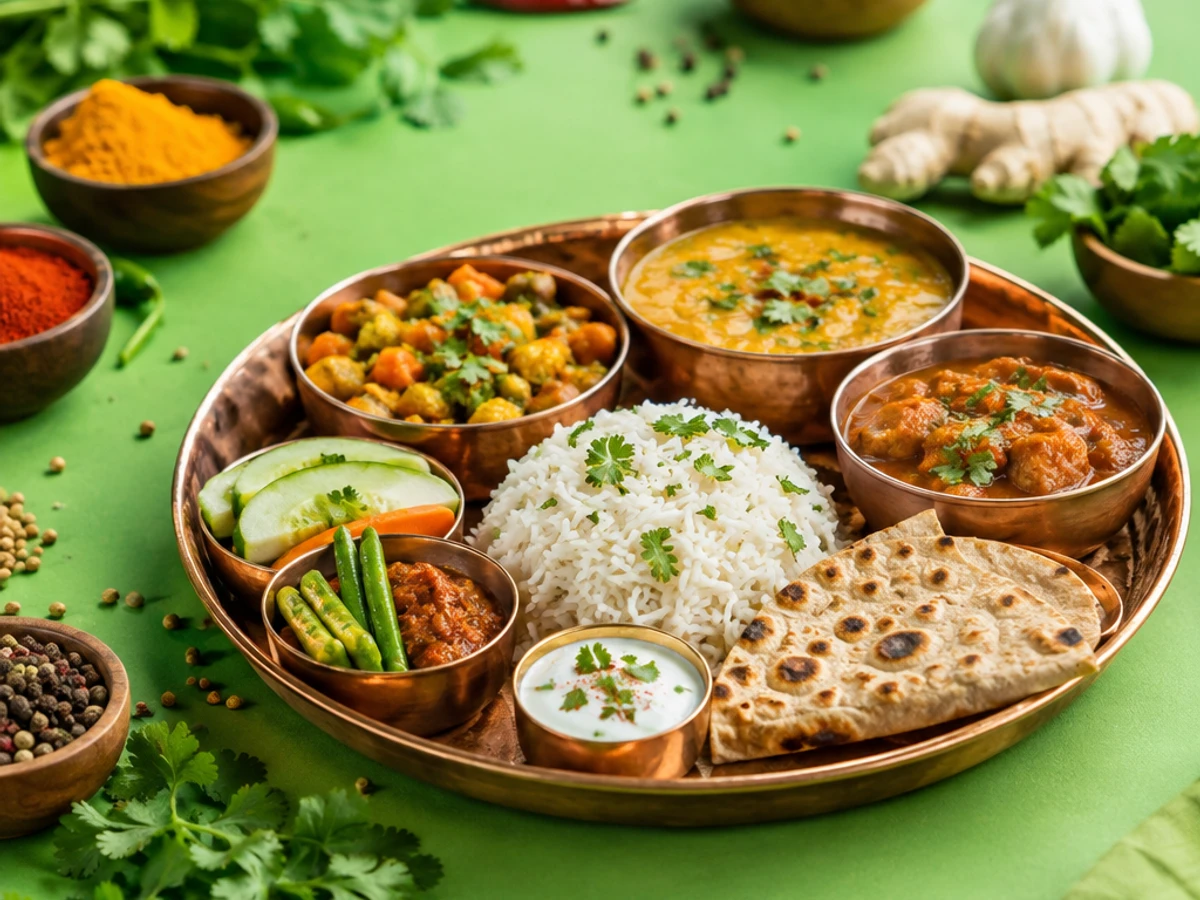
The same thali, eaten in a different order with a smaller rice portion, can give a very different reading.
South Indian meal example
Start with beans poriyal and a cucumber salad, then sambar with plenty of vegetables, followed by a small portion of rice mixed with the remaining sambar. Finish with a small bowl of curd rather than a large serving of curd rice, and take a short walk afterwards.
To see these strategies in action, check out the video below for practical tips on incorporating these changes into your Indian meals.
Eating out without a big spike
- Order smart: Start with a salad or soup, then dal, tandoori items or dry sabzi.
- Choose roti over naan: Tandoori roti is usually lighter than butter naan.
- Share the rice or biryani: Take a small portion and fill up on raita and vegetables.
Breakfast Ideas That Raise Sugar More Slowly
Breakfasts built on protein and fibre tend to raise blood sugar more slowly than those based on refined starch or sugar. Swapping white bread and sweet tea for a protein-rich Indian breakfast can make a noticeable difference.
| Instead of | Try | Why it helps |
|---|---|---|
| White bread with jam | Moong dal chilla with mint chutney | Protein and fibre |
| Large plate of poha | Smaller poha with peanuts, sprouts and vegetables | Adds protein and fibre |
| Sweet cornflakes | Vegetable oats upma or dalia | Whole grain, no added sugar |
| Aloo paratha with butter | Paneer or methi paratha (whole wheat), with curd | More protein, less starch |
| Biscuits with sweet chai | Boiled eggs or besan chilla, chai without sugar | Protein, less sugar |
- Add protein: Eggs, paneer, curd, sprouts or dal-based dishes.
- Add vegetables: Onion, tomato, capsicum, spinach or grated carrot.
- Skip added sugar: In chai, coffee and cereals.
Who Should Be Careful, and When to See a Doctor
Softening spikes is safe for most people, but some need to make changes with their doctor. People on insulin or sulfonylureas should talk to their doctor before changing their diet or exercise, because eating less carbohydrate or exercising more can cause low blood sugar.
- Frequent high readings: If after-meal readings are often above the targets your doctor gave you, your plan needs review.
- Symptoms of very high sugar: Excessive thirst, frequent urination, vomiting, confusion or drowsiness need urgent medical care.
- Insulin or sulfonylureas: Discuss diet and exercise changes first to avoid hypos.
- Pregnancy: See your doctor for pregnancy-specific advice.
- Symptoms of low sugar: Shaking, sweating or confusion need prompt treatment.
Ayurvedic support
In Ayurveda, jamun and vijaysar are traditionally used in diabetes care, always alongside prescribed treatment. Read about the benefits of eating jamun and vijaysar wood glass benefits. If you’re considering fasting, read our view on fasting and speak to your doctor first.
Common Questions About Blood Sugar Spikes
Here are quick answers to the most common questions, before the full FAQ.
- What is a blood sugar spike? A quick rise in glucose after eating, mainly from fast-digesting starch and sugar.
- Do bananas spike blood sugar? They can, especially ripe ones in large amounts; pair a small banana with nuts or curd.
- Does jaggery spike blood sugar? Yes, it’s still sugar.
- Does blood sugar spike after exercise? Usually, gentle exercise lowers blood sugar. Very intense exercise can briefly raise it in some people because of stress hormones; check with your doctor if you notice this.
Conclusion
A blood sugar spike is a quick rise in glucose after eating, mostly from refined starch and sugar. You can soften spikes with familiar Indian meals by eating vegetables first, adding dal, keeping rice portions small, having a lighter, earlier dinner and walking after meals, while checking your readings against your doctor’s targets.
Key Takeaways
- Main causes: Refined starch, large portions, carbs alone and late heavy dinners.
- Check, don’t guess: A glucometer is the only reliable way to know.
- Food order: Vegetables and protein first, rice last.
- Breakfast: Protein and fibre-based options raise sugar more slowly.
- Safety: Talk to your doctor before changes if you take insulin or sulfonylureas.
Want help softening your after-meal readings? Book a diabetes diet consultation with Dr. Arun Jharwal at Anantam Ayurveda.
Frequently Asked Questions
What causes blood sugar spikes after eating, what are the signs, and how can Indian meals soften them?
Spikes are caused mainly by fast-digesting starch and sugar, large portions, eating carbs alone and late heavy dinners. Many people feel nothing, so a glucometer is the best check. Eating vegetables first, adding dal, keeping rice portions small, eating dinner earlier and walking after meals help soften spikes.
What is a blood sugar spike?
A quick, steep rise in blood glucose after a meal, usually within one to two hours.
Do bananas spike blood sugar?
They can, especially when very ripe or eaten in large amounts. A small banana with nuts or curd is gentler.
Does jaggery spike blood sugar?
Yes. Jaggery is mostly sugar and raises blood sugar much like table sugar.
Does blood sugar spike after exercise?
Gentle exercise like walking usually lowers blood sugar. Very intense exercise can briefly raise it in some people.
Does dosa spike blood sugar?
It can, depending on portion and pairing. Eat fewer dosas with sambar and vegetable chutney.
Do oats spike blood sugar?
Rolled or steel-cut oats without sugar raise sugar more slowly than instant, sweetened oats. Add nuts or curd.
Methodology and disclaimer: This article draws on the NIDDK summary of the ADA Standards of Care in Diabetes 2025, a study of the glycaemic index of Indian rice varieties, a 2019 food-order trial, a 2014 trial of legumes with rice in Asian Indians, a 2019 review of diurnal glycaemic response and a 2012 BMJ meta-analysis on white rice. Food-specific answers are general and qualitative. This article is educational and not a substitute for medical advice; use the blood sugar targets your doctor gives you.