
Halim Seeds for Iron: Benefits, How to Eat, Dosage and Side Effects
Halim seeds (garden cress, aliv, Lepidium sativum) are one of the richest plant sources of iron in Indian food: about 17.2 mg of iron per 100 g, according to the Indian Food Composition Tables 2017. That is roughly six times more than spinach (2.95 mg) and more than 20 times more than beetroot (0.76 mg) or pomegranate (0.31 mg). They also give protein (about 23 g per 100 g) and calcium, and Ayurveda has long used them to rebuild strength after childbirth.
- How to take: soak 1 teaspoon (about 5 g) overnight in water or milk and eat it in the morning, with lemon or another vitamin C food.
- Why lemon: vitamin C can more than double the absorption of plant iron.
- Avoid: during pregnancy. Ask your doctor first if you have a thyroid problem.
- Be realistic: 1 teaspoon gives about 0.9 mg of iron, a useful top-up but not a cure. Diagnosed anaemia usually needs iron tablets prescribed by a doctor.
Medically reviewed by: Dr. Arun Jharwal, BAMS, MD (Ayurveda)
Halim Seeds at a Glance
| Feature | Details |
|---|---|
| Botanical name | Lepidium sativum L. |
| Family | Brassicaceae (mustard family) |
| Common names | Halim, Aliv, Chandrasur (Hindi/Marathi); Garden cress (English); Chandrashura (Sanskrit) |
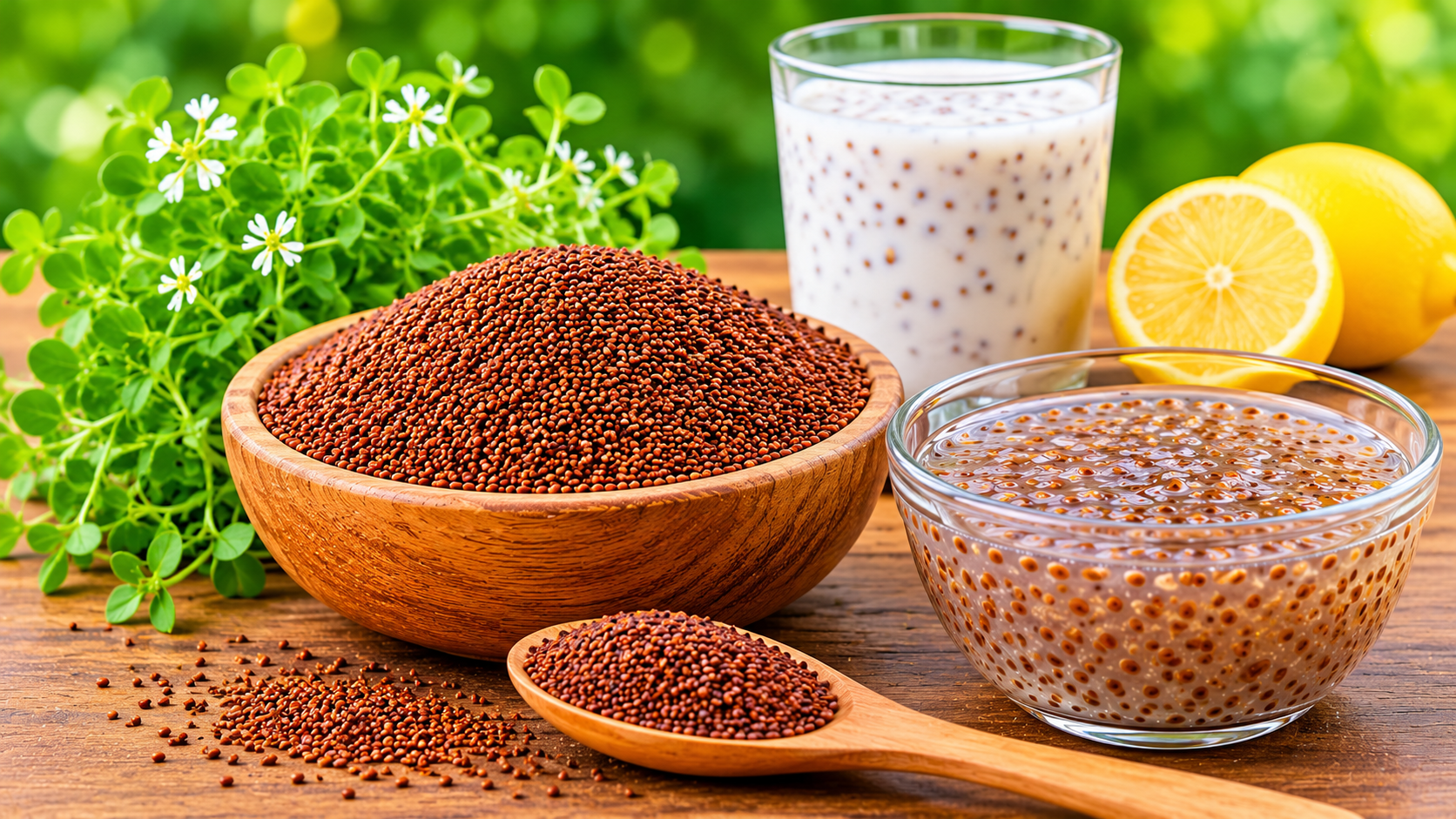
| Look | Tiny reddish-brown seeds, about the size of mustard seeds; turn gel-like when soaked |
| Iron | 17.2 mg per 100 g (IFCT 2017) |
| Protein | 23.4 g per 100 g |
| Calcium | 318 mg per 100 g |
| Potency in Ayurveda | Ushna (hot) |
| Usual amount | 1 teaspoon (about 5 g) a day |
| Cost | Very cheap; a month’s supply usually costs less than a cup of coffee |
Iron Deficiency in India: Why It Matters
Anaemia is one of India’s biggest nutrition problems. According to the National Family Health Survey (NFHS-5, 2019–21), 57% of women aged 15–49 and 67% of children aged 6–59 months are anaemic, and the numbers rose compared with NFHS-4. Iron deficiency is the most common cause.
Common signs of low iron
- Constant tiredness and weakness
- Breathlessness on climbing stairs
- Pale skin, inner eyelids or nails
- Hair fall and brittle or spoon-shaped nails
- Headaches, dizziness and poor concentration
- Cold hands and feet
- Craving to eat ice, mud or chalk (pica)
Daily iron needs (ICMR-NIN 2020)
| Group | Recommended iron per day |
|---|---|
| Adult men | 19 mg |
| Adult women (menstruating) | 29 mg |
| Pregnant women | 27 mg (plus supplements as advised) |
| Breastfeeding women | 23 mg |
These amounts are high because Indian diets are mostly plant-based, and the body absorbs plant iron poorly. That is why both what you eat and how you eat it matter.
Halim vs Spinach, Beetroot and Pomegranate: The Real Iron Numbers
Popular “iron foods” are not always iron-rich. Here are the values from the Indian Food Composition Tables 2017 (ICMR-NIN), per 100 g of edible portion.
| Food | Iron (mg per 100 g) | Notes |
|---|---|---|
| Halim seeds (garden cress) | 17.2 | Among the highest plant sources; eaten in small amounts |
| Til (sesame seeds) | 13.9 | Also rich in calcium |
| Soybean | 8.29 | Good protein too |
| Masoor dal | 7.06 | Easy everyday source |
| Rajma | 6.13 | |
| Chana (Bengal gram) | 6.08 | |
| Methi (fenugreek) leaves | 5.69 | Best of the common leafy greens |
| Chaulai (amaranth) leaves | 4.64 | |
| Gur (jaggery) | 4.63 | Mostly sugar; eat in small amounts |
| Dates | 3.2 | |
| Palak (spinach) | 2.95 | High oxalate reduces absorption |
| Amla | 1.25 | Low iron, but very rich in vitamin C, which helps absorption |
| Chukandar (beetroot) | 0.76 | Low in iron despite its red colour |
| Anar (pomegranate) | 0.31 | Very low in iron |
Why spinach is not the iron hero
Spinach does contain iron, but it is also rich in oxalate, which binds iron in the gut and blocks most of it from being absorbed. Spinach is still a healthy vegetable; it is simply not the best food to fix low iron.
The “100 mg iron” claim
Many websites say halim seeds contain 100 mg of iron per 100 g. That figure comes from older food tables. The latest Indian Food Composition Tables (2017) list 17.2 mg, and other lab analyses report values between about 8 and 17 mg, far below 100 mg. Halim is still an excellent plant source of iron, but 17.2 mg is the honest number.
Heme vs non-heme iron
Iron from meat, fish and eggs (heme iron) is absorbed far better than iron from plants (non-heme iron). All the foods above, including halim, contain non-heme iron, so pairing them with vitamin C is especially important for vegetarians.
How to Absorb More Iron From Halim (and Other Plant Foods)
Eating iron is only half the job; your body has to absorb it. These simple habits make a big difference:
- Add vitamin C at the same meal. Lemon juice, amla, guava, orange, tomato or green chutney can more than double the absorption of plant iron. Amla (252 mg vitamin C per 100 g) and guava (214 mg) are especially rich.
- Keep tea and coffee away from meals. Their tannins and polyphenols can cut iron absorption sharply. Drink them at least 1 hour before or after an iron-rich meal.
- Do not take calcium with iron. Calcium tablets and large amounts of milk can reduce iron absorption; take iron-rich foods and calcium at different times.
- Soak, sprout or ferment. Soaking halim, sprouting moong and fermenting idli or dosa batter reduce phytate, which otherwise blocks iron.
- Cook in an iron kadai. Cooking sour or wet dishes in cast iron adds a small amount of usable iron to food.
The Ayurvedic View: Chandrashura
In Ayurveda, halim is called Chandrashura (Chandrasur in Hindi). It is best known as a strength-building food for new mothers, given as aliv laddoo or kheer after delivery.
Properties of Chandrashura
- Rasa (taste): Katu (pungent), Tikta (bitter)
- Guna (qualities): Laghu (light), Snigdha (unctuous), Picchila (slimy, because of its mucilage)
- Virya (potency): Ushna (hot)
- Vipaka (post-digestive effect): Katu (pungent)
- Dosha effect: balances Vata and Kapha; can increase Pitta in excess
- Key actions: Balya (gives strength), Pushtivardhana (nourishing), Stanyajanana (supports breast-milk production), Vatahara (calms Vata)
- Traditional uses: weakness after childbirth (Sutika), back and joint pain from Vata, hiccups, loose stools and as a general tonic
Why it is given after childbirth
After delivery, Ayurveda sees the body as depleted and Vata as high. Halim is warming, nourishing and Vata-calming, and it supports milk supply, so it is cooked with ghee, jaggery, coconut and dry fruits into laddoos for new mothers. Its iron, protein and calcium fit this traditional use well.
Benefits of Halim Seeds
1. Supports iron levels and anaemia prevention
With 17.2 mg of iron per 100 g, halim is one of the most iron-dense foods in the Indian kitchen. A few small Indian studies in anaemic adolescent girls and women found that daily halim-based foods such as laddoos raised haemoglobin modestly over several weeks. These studies were small and mostly lacked a proper control group, so halim should be seen as a useful dietary support, not a treatment for diagnosed anaemia.
2. Post-delivery recovery and breast milk
Ayurveda gives halim to new mothers for strength and to support milk supply. Animal studies support a galactagogue (milk-boosting) effect, but human data are limited.
3. Plant protein and calcium
With about 23 g of protein and 318 mg of calcium per 100 g, halim adds useful nutrition to vegetarian diets, though the small daily serving limits how much it contributes.
4. Digestion and constipation
When soaked, halim seeds form a soft gel (mucilage) that adds bulk and can ease constipation. Drink enough water when you eat them.
5. Other traditional and lab findings
Lab and animal studies report anti-inflammatory, bone-healing, blood-sugar-lowering and bronchodilator effects of halim extracts. These are early findings and have not been confirmed in people.
Evidence summary
| Benefit | Type of evidence |
|---|---|
| High iron content | Food composition data (IFCT 2017) |
| Raising haemoglobin | Small, mostly uncontrolled human studies |
| Breast-milk support | Traditional use, animal studies |
| Constipation relief | Traditional use, fibre and mucilage content |
| Bone healing, blood sugar, asthma | Animal and lab studies |
How to Eat Halim Seeds
1. Soaked in lemon water (best for iron)
- Soak 1 teaspoon of halim seeds in half a glass of water overnight. They will swell into a soft gel.
- In the morning, add the juice of half a lemon and drink it.
The lemon’s vitamin C helps your body absorb the iron. This is the best everyday method if your goal is iron.
2. Soaked in milk (traditional)
Soaking halim in warm milk overnight is a traditional method, especially for new mothers and children. Note that the calcium in milk can reduce iron absorption, so if iron is your main goal, prefer lemon water and have milk at another time.
3. Halim (aliv) laddoo recipe
Makes about 12 small laddoos.
You need:
- ½ cup halim seeds
- 1 cup grated fresh coconut (or ¾ cup desiccated coconut)
- ¾ cup grated jaggery
- 2 tablespoons ghee
- 2 tablespoons chopped almonds or cashews
- ¼ teaspoon cardamom powder
Method:
- Soak the halim seeds in ½ cup water (or coconut water) for 1–2 hours until they swell.
- Mix the soaked seeds with coconut and jaggery and leave for 15 minutes.
- Heat the ghee in a heavy kadai, add the mixture and cook on low heat, stirring often, for 15–20 minutes until it thickens and leaves the sides of the pan.
- Add the nuts and cardamom, cool slightly and shape into small laddoos while warm.
- Store in the fridge and eat within a week. One laddoo a day is enough.
Pair the laddoo with a vitamin C food such as a guava, an orange or amla for better iron absorption.
4. Other easy ways
- Sprinkle soaked seeds into smoothies, buttermilk or curd.
- Add soaked seeds to kheer or porridge.
- Grow them as microgreens on wet cotton in 3–4 days and add the sprouts to salads and sandwiches.
Best time to eat them
Morning, preferably on an empty stomach or with breakfast, along with a vitamin C food. Keep tea and coffee at least an hour away.
Dosage
| Form | Usual amount |
|---|---|
| Soaked seeds (adults) | 1 teaspoon (about 5 g) a day |
| Halim laddoo | 1 small laddoo a day |
| Children over 5 years | ½ teaspoon a day, or half a laddoo |
| Microgreens | A handful in salads |
At 1 teaspoon a day, halim gives about 0.9 mg of iron. Use it as part of an iron-rich diet, not as the only source.
Side Effects and Who Should Avoid Halim Seeds
In food amounts, halim is safe for most people. Problems usually come from large amounts or specific conditions.
Possible side effects
- Bloating, gas or loose stools when you start, or if you eat too much
- Constipation or choking risk if dry seeds are swallowed without enough water; always soak them first
- Heat in the body (acidity, mouth ulcers) in people with high Pitta, because halim is Ushna (hot)
- Allergy (rare), especially in people allergic to mustard-family plants
Who should avoid it
- Pregnant women: halim seeds have been used traditionally in large doses to induce abortion, and they can stimulate the uterus. Avoid them during pregnancy; they are traditionally given only after delivery.
- Women trying to conceive should avoid large or regular medicinal doses.
Who should ask a doctor first
- People with thyroid problems (especially hypothyroidism): like other mustard-family seeds, halim contains glucosinolates, which in large amounts may interfere with thyroid hormone production.
- People on blood pressure or diabetes medicines: animal studies suggest halim may lower blood pressure and blood sugar.
- People with very low blood pressure.
- People with kidney or bowel problems, or anyone with difficulty swallowing.
- Children under 5: ask a paediatrician before giving.
When Food Is Not Enough: Get Tested
Food can prevent iron deficiency and support recovery, but it rarely fixes established anaemia on its own. If you have symptoms of low iron, get a simple blood test.
Tests to ask for
- Haemoglobin (CBC): anaemia is usually diagnosed when haemoglobin is below 12 g/dL in non-pregnant women, below 13 g/dL in men, and below 11 g/dL in pregnant women.
- Serum ferritin: shows your body’s iron stores; it falls before haemoglobin does.
When to see a doctor
- Haemoglobin is low, or symptoms such as breathlessness, palpitations or fainting appear
- Very heavy periods, black stools, or blood in stool or urine
- Pregnancy, or planning a pregnancy
- Anaemia that does not improve after 2–3 months of diet changes
Doctors usually prescribe iron tablets (and folic acid in pregnancy) for diagnosed iron-deficiency anaemia. Halim and other iron-rich foods work well alongside this treatment and help prevent the problem from coming back.
Myths vs Facts
| Myth | Fact |
|---|---|
| Spinach is the best food for iron. | Spinach has 2.95 mg of iron per 100 g, and its oxalate blocks much of it. Halim (17.2 mg), til, dals and methi leaves are better. |
| Beetroot and pomegranate build blood. | They are healthy, but low in iron: 0.76 mg and 0.31 mg per 100 g. |
| Halim seeds have 100 mg of iron per 100 g. | That figure is from older tables. The Indian Food Composition Tables 2017 list 17.2 mg. |
| One spoon of halim can cure anaemia. | 1 teaspoon gives about 0.9 mg of iron. It helps, but diagnosed anaemia usually needs iron tablets. |
| Halim is safe in pregnancy because it is given to new mothers. | It is given after delivery. During pregnancy it should be avoided, as it can stimulate the uterus. |
| Drinking tea with an iron-rich breakfast is fine. | Tea and coffee can sharply cut iron absorption. Keep them at least an hour away. |
Scientific Research and Data Sources
Halim has strong nutrition data but limited clinical research. The sources below support this article.
- Iron and nutrient values: halim (garden cress) seeds contain 17.2 mg iron, 23.4 g protein and 318 mg calcium per 100 g. Longvah T et al. Indian Food Composition Tables 2017, National Institute of Nutrition (ICMR), Hyderabad. Summary table
- Comparison foods: spinach 2.95 mg, beetroot 0.76 mg, pomegranate 0.31 mg, methi leaves 5.69 mg and jaggery 4.63 mg of iron per 100 g. Indian Food Composition Tables 2017. Leafy vegetables · Fruits · Roots and tubers
- Review of garden cress seeds: describes the seeds as a rich source of non-heme iron used to help anaemia, a galactagogue for nursing mothers, an abortifacient in excess (to be avoided in pregnancy), and a source of goitrogens that may affect the thyroid. Singh CS, Paswan VK, Naik B, Reeta. Indian Journal of Natural Products and Resources, 2015; 6(3): 167–175. Read (PDF)
- Anaemia in India: 57% of women aged 15–49 and 67% of children aged 6–59 months were anaemic. National Family Health Survey (NFHS-5), 2019–21, Ministry of Health and Family Welfare.
- Daily iron needs: recommended dietary allowances for Indians. ICMR-NIN Nutrient Requirements for Indians, 2020.
Frequently Asked Questions (FAQs)
What are halim seeds called in English?
Garden cress seeds. They are also called aliv (Marathi), chandrasur (Hindi) and asaliya, and the botanical name is Lepidium sativum.
How much iron is in halim seeds?
About 17.2 mg per 100 g, according to the Indian Food Composition Tables 2017. One teaspoon (about 5 g) gives roughly 0.9 mg.
Are halim seeds better than spinach for iron?
Yes. Halim has about six times more iron than spinach per 100 g, and spinach’s oxalate blocks much of its iron from being absorbed.
How should I eat halim seeds for iron?
Soak 1 teaspoon overnight in water, add lemon juice in the morning and drink it. The vitamin C in lemon helps absorption.
Can I eat halim seeds with milk?
Yes, it is a traditional method. But milk’s calcium can reduce iron absorption, so if iron is your goal, lemon water is better.
How much halim should I eat per day?
1 teaspoon (about 5 g) a day is enough for most adults. Children over 5 can have half a teaspoon.
How long does halim take to increase haemoglobin?
Food-based iron works slowly. Small studies saw modest increases over several weeks to a few months. If your haemoglobin is low, get it rechecked after 2–3 months.
Can halim seeds cure anaemia?
They can help prevent and support recovery from mild iron deficiency, but diagnosed anaemia usually needs iron tablets from a doctor.
Can pregnant women eat halim seeds?
No. Halim seeds can stimulate the uterus and have been traditionally used to cause abortion in large doses. They are given only after delivery.
Why are halim laddoos given after delivery?
Ayurveda uses them to rebuild strength, calm Vata and support breast-milk production in new mothers. They are also rich in iron, protein and calcium.
Are halim seeds good for hair?
Iron and protein deficiency can cause hair fall, so halim may help if your hair fall is linked to low iron. There is no direct evidence that it grows hair.
Can people with thyroid problems eat halim?
Ask your doctor first. Halim contains goitrogens, which in large amounts may affect the thyroid, especially in hypothyroidism.
Can halim seeds be eaten raw?
It is better to soak them first. Dry seeds can be hard to digest and may stick in the throat.
What do soaked halim seeds look like?
They swell and get a clear, jelly-like coating, similar to soaked sabja or chia seeds.
Halim vs sabja vs chia seeds: which is best for iron?
Halim is the best for iron among the three. Chia is richer in omega-3 fats, and sabja is mainly used as a cooling drink.
Can children eat halim seeds?
Yes, children over 5 can have half a teaspoon soaked, or half a laddoo. Ask a paediatrician for younger children.
Do halim seeds cause weight gain?
The seeds alone are low in calories at a teaspoon a day. Laddoos made with ghee, jaggery and coconut are calorie-dense, so watch portions.
Which foods help iron absorption from halim?
Lemon, amla, guava, orange, tomato and green chutney, all rich in vitamin C.
What foods should I avoid with iron-rich meals?
Tea, coffee and calcium supplements reduce iron absorption. Keep them at least an hour away.
Where can I buy halim seeds?
They are sold cheaply at grocery and kirana stores as halim, aliv or chandrasur, and online.
Conclusion
Halim seeds are one of the cheapest and richest plant sources of iron in the Indian kitchen. At 17.2 mg per 100 g, they beat spinach, beetroot and pomegranate by a wide margin, and they also bring protein, folate and calcium. Ayurveda has trusted them for centuries to rebuild strength after childbirth.
The key is how you eat them. Soak one teaspoon overnight, take it with lemon or another vitamin C food, and keep tea and coffee away from that meal. Make it a daily habit rather than a one-time remedy.
Remember the limits too. Halim is not for pregnancy, people with thyroid problems should ask their doctor first, and diagnosed anaemia usually needs proper treatment. Use halim seeds as a daily support, and get your haemoglobin checked if symptoms continue.
Medical Disclaimer
This article is for educational purposes only and is not a substitute for professional medical advice, diagnosis or treatment. If you have symptoms of anaemia, are pregnant or breastfeeding, have a thyroid condition or take regular medicines, consult a qualified doctor or Ayurvedic physician before using halim seeds.
Medically reviewed by: Dr. Arun Jharwal, BAMS, MD (Ayurveda)
Related Reading
- Amla (Indian Gooseberry): Benefits, Uses and Side Effects — the best vitamin C partner for halim seeds
- Palash: Benefits, Uses and Side Effects
Sources
- Longvah T, et al. Indian Food Composition Tables 2017. National Institute of Nutrition (ICMR), Hyderabad.
- Singh CS, Paswan VK, et al. Nutritional and therapeutic potential of garden cress (Lepidium sativum). Indian Journal of Natural Products and Resources, 2015; 6(3):167–175. PDF
- International Institute for Population Sciences. National Family Health Survey (NFHS-5), 2019–21: India Fact Sheet. Ministry of Health and Family Welfare.
- ICMR-NIN Expert Group. Nutrient Requirements for Indians: Recommended Dietary Allowances and Estimated Average Requirements, 2020.
- World Health Organization. Haemoglobin concentrations for the diagnosis of anaemia and assessment of severity. WHO, 2011.